I regularly make sourdough bread, usually using strong white flour, or rye, or a wholemeal mixture, occasionally granary, sometimes even einkorn or spelt. Often I add cheese or sun-dried tomatoes or herbs or various other savoury goodies. But until a few days ago I’d never made a sweet sourdough. So this is an experiment that worked really well, giving two small, soft, tasty, sweet loaves.
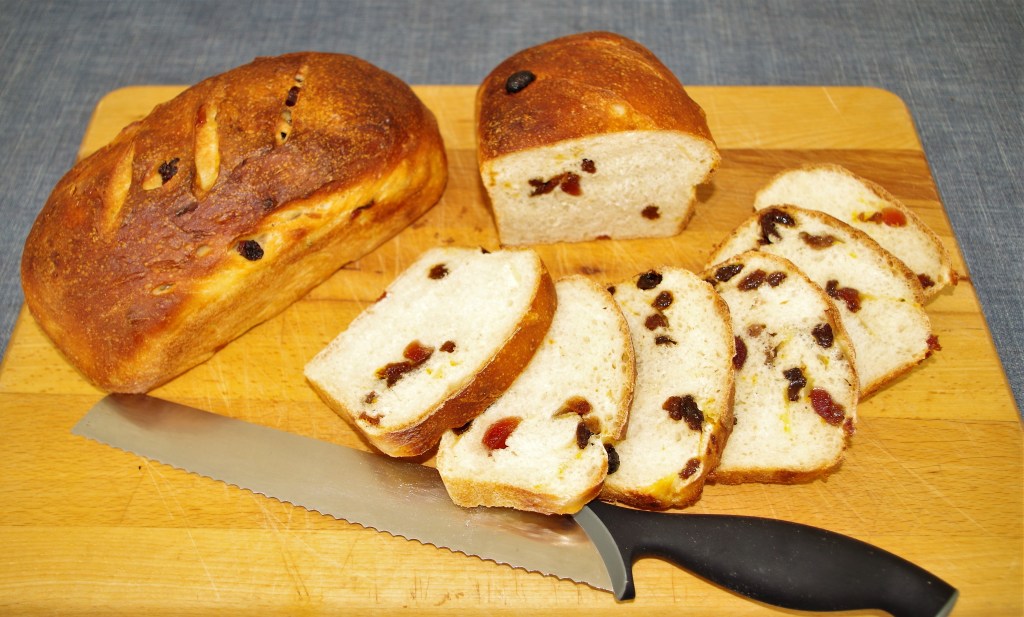
Makes: Two small loaves, each giving 10 – 12 slices
Time: It’s a two day process, so be prepared to be flexible, mainly on day 2.
Level: It might be a learning experience, unless you bake bread regularly
Need: 2 x 900g/2lb loaf tins

Ingredients
- 250ml/9fl oz sourdough starter
- 30g/1oz sugar
- 180ml/6fl oz tepid liquid (most of a lightly beaten egg* + buttermilk or milk)
- 20ml/¾fl oz olive oil
- 400g/14oz white bread flour
- 8g salt
- 200g/7oz dried fruit, nuts, cherries etc.
- The zest from one orange
* Keep enough egg to water down a little for egg washing the bread before baking
Method
1. On day 1 around 4:30pm* I measure the starter into my stand mixer bowl then I mix the sugar into the tepid liquid and pour this in plus the olive oil. Next in is the flour and salt. I mix it all together, scraping the dough ball around the inside of the bowl to gather any unmixed material.
* N.B. I’m an early morning person. If you’re not, then I suggest you start this process much later in the evening to avoid having to get up early the following morning.
2. Knead with a dough hook in the stand mixer for about 6 – 8 minutes. When there’s a ball of stretchy dough that slaps against the side of the bowl, it’s probably ready. Kneading by hand will take at least 15 – 18 minutes.
3. Transfer the dough ball into a lightly oiled bowl. Gently pull and stretch the sides of the dough over and into the middle a few times, turning the bowl each time. Cover the bowl – I use a shower cap – and leave to prove overnight. Meanwhile, line two loaf tins with baking parchment.
4. Very early the next morning (I told you I’m an early morning person) the dough should have risen to at least double the volume*. Gently fold it over a few times then flatten it out on a lightly floured surface.
* The room temperature overnight is a big factor in the rising time. A warm environment gives a much speedier rise. But a slow rise in a cooler place produces more flavour.
5. Scatter the fruit, nuts and zest over the dough and fold it all in gently, making sure it’s all well distributed.
6. Divide the dough into two halves. Roll then fold each piece to fit into the loaf tins. Place the two tins inside a large plastic bag (a clean kitchen bin liner works well). Fold the loose opening underneath the bag to trap air and create a “balloon effect” then leave for a second prove. It could be several hours.
7. In the latter stages of the second rise, turn the oven on to reach Fan 210°C – 220°C. If you have a baking stone put it in the oven now to heat up. Also put in a suitable dish to pour water into to create steam.
8. When the doughs have risen brush them with a weak egg wash and cut a few slashes on them with a razor blade or very sharp knife.
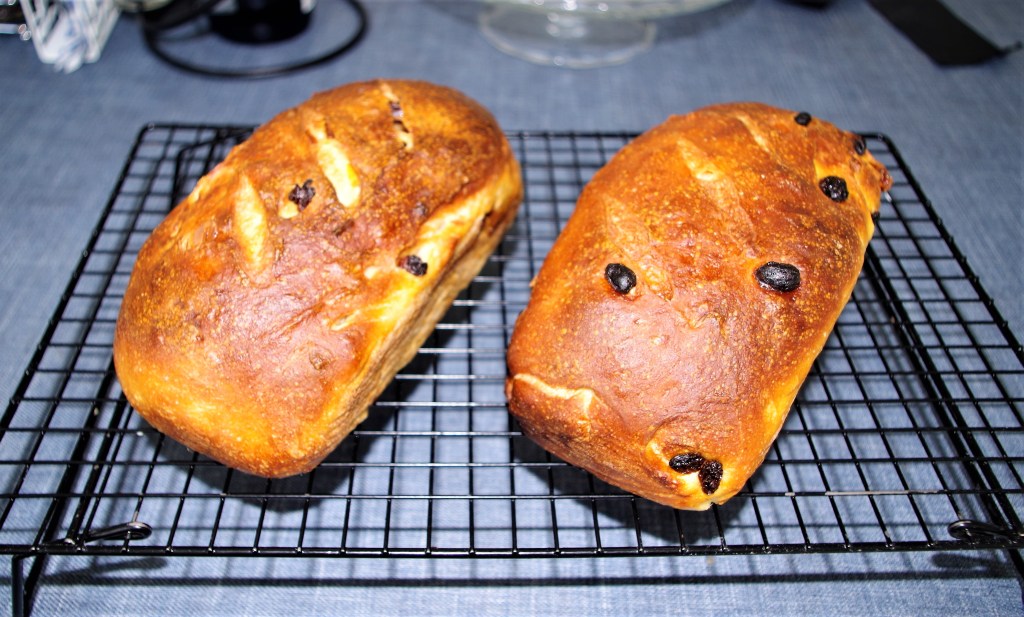
9. Pour some just boiled water into the dish in your oven then bake the loaves for about 25 minutes. They may need to be covered in the latter stages if they begin to go very dark.
10. Test they’re done by tapping the bottom with your fingers. A clear hollow sound and feel indicates the bread has baked. Turn out and cool on a wire rack.
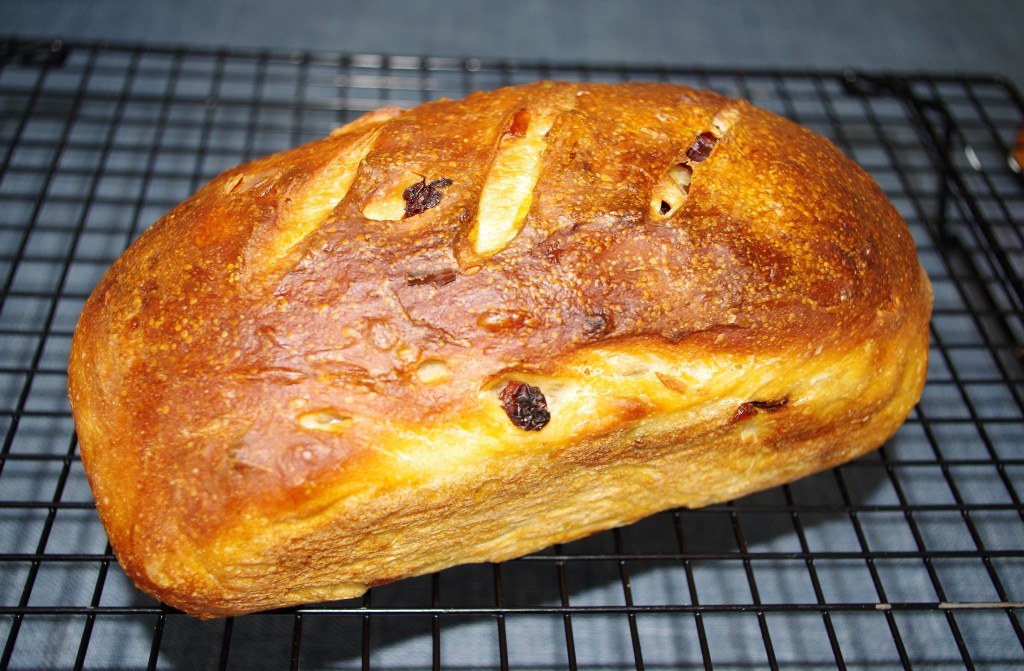

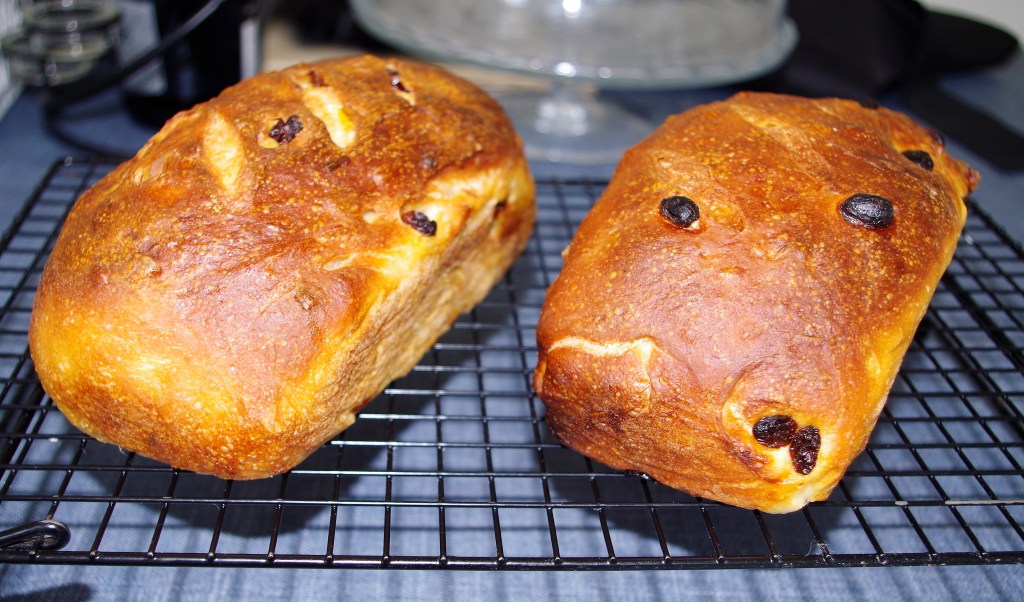
I wish you every success with your bread making. I hope you have a go at this one and enjoy making and eating a lovely loaf. If you want to see more of my bread recipes click this link.
Here are some quite different breads that you might want to try:
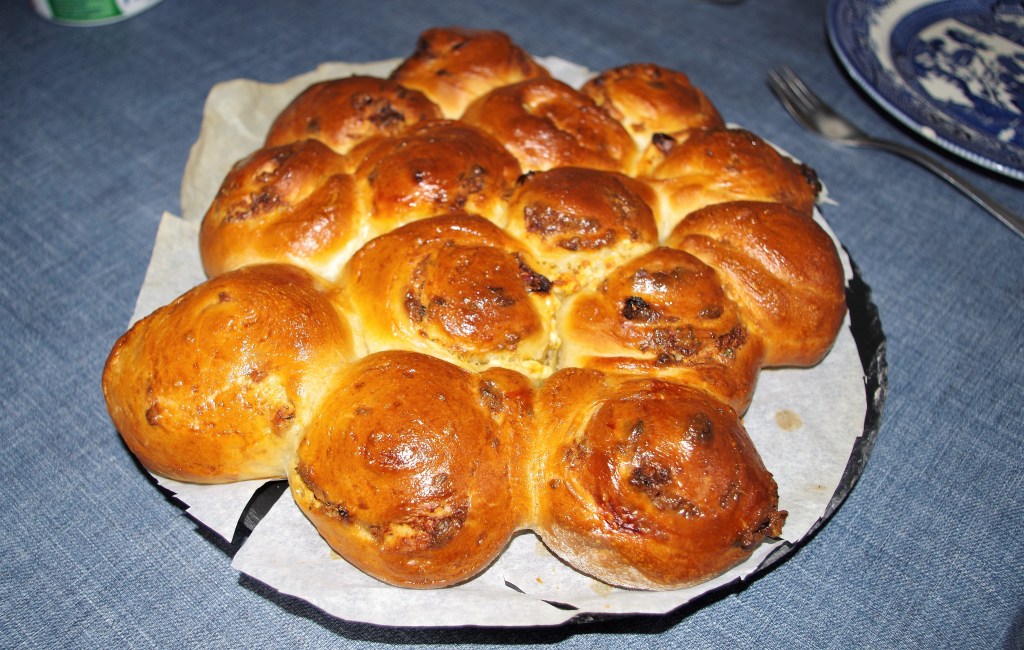
Tear & Share Bread with Cheese, Herbs & Sun-dried tomatoes


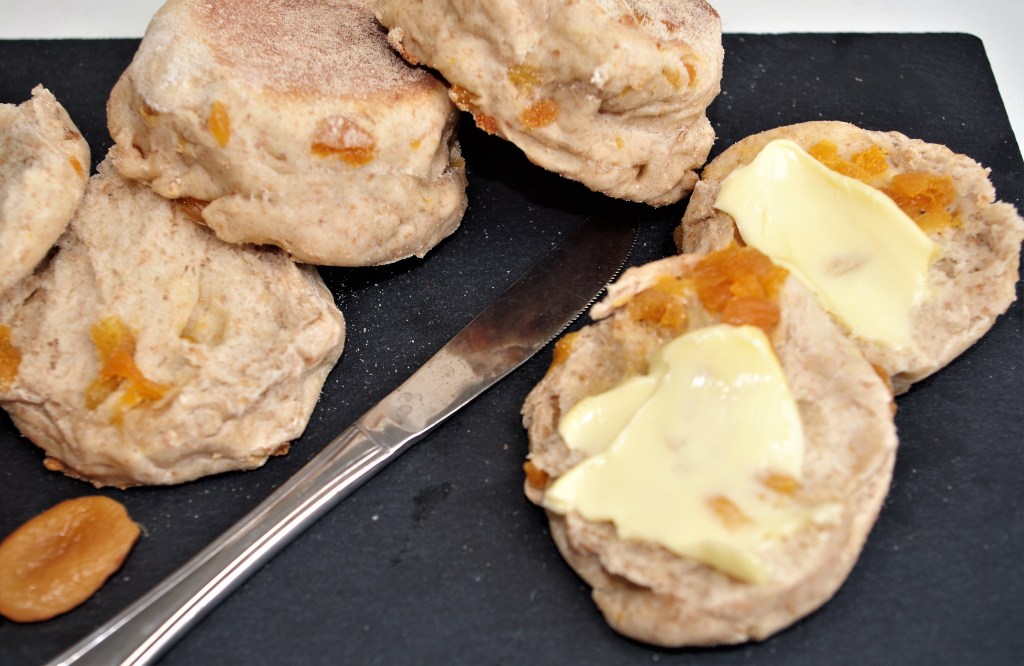
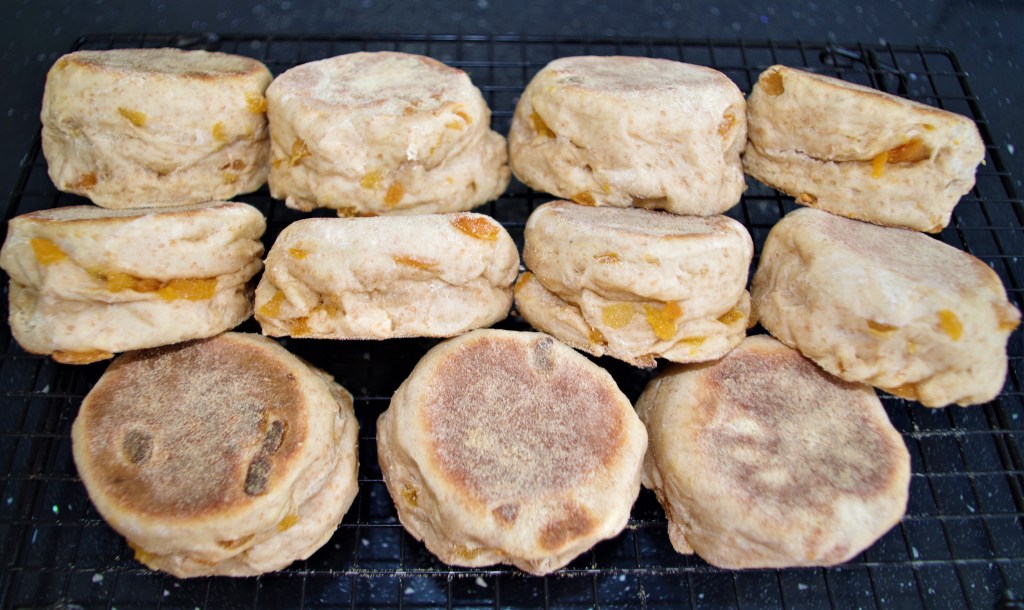
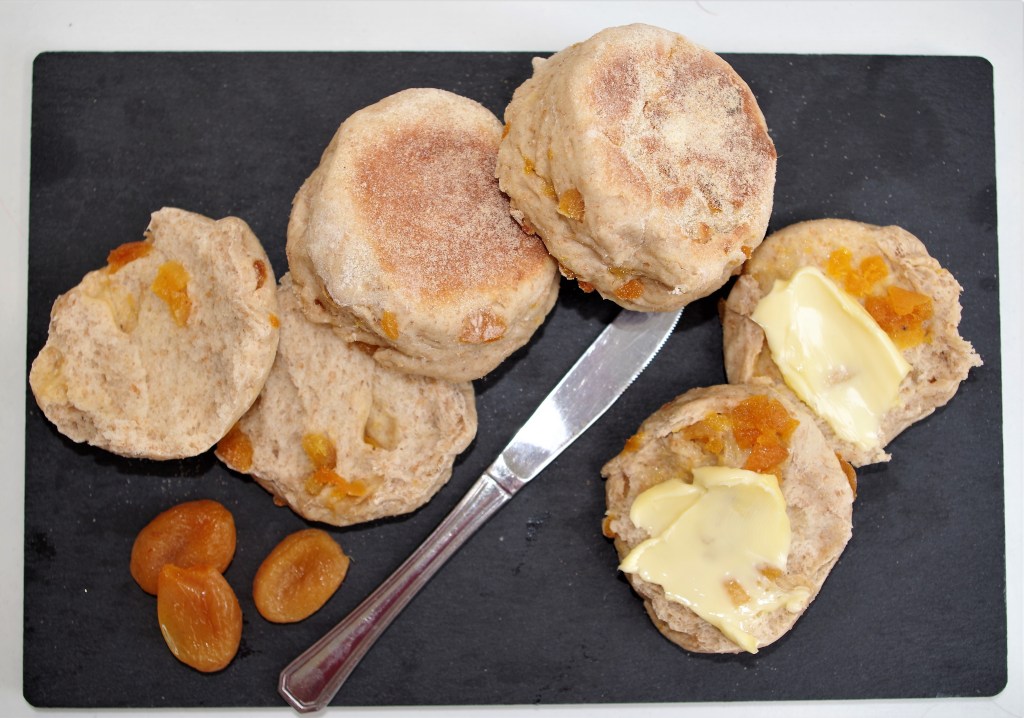
Rye & Wholemeal Apricot English Muffins
Dark Rye, Wholemeal and Wheat flour seeded Cob
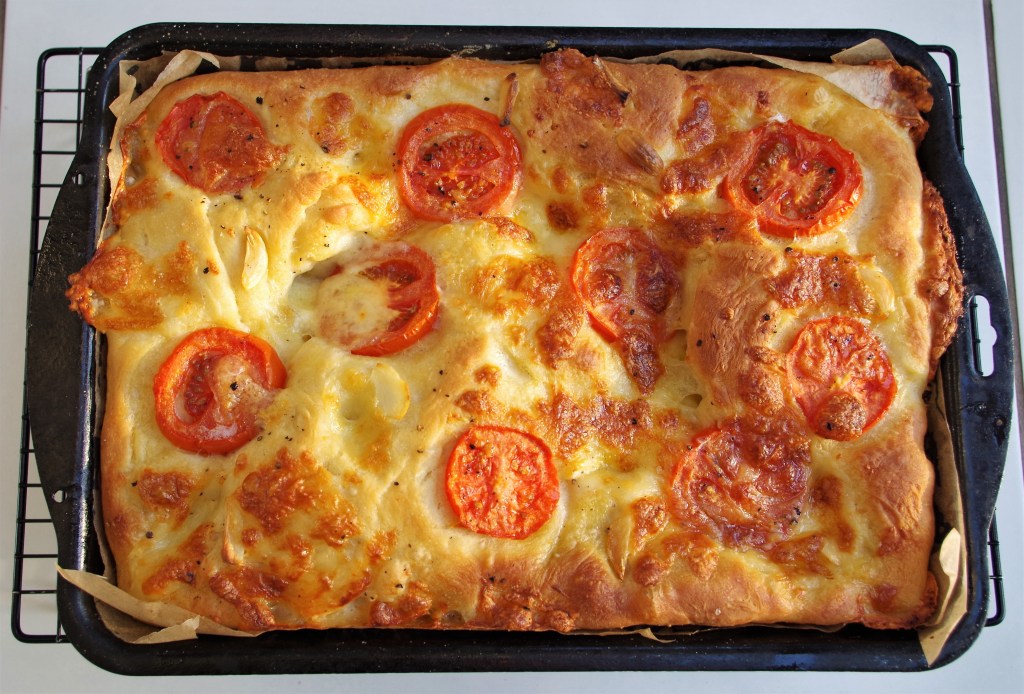
Focaccia con Mozzarella, pomodoro e aglio


If you’d like to make a comment or ask a question please do, via the contact page.
 Retired Bloke on Food n stuff