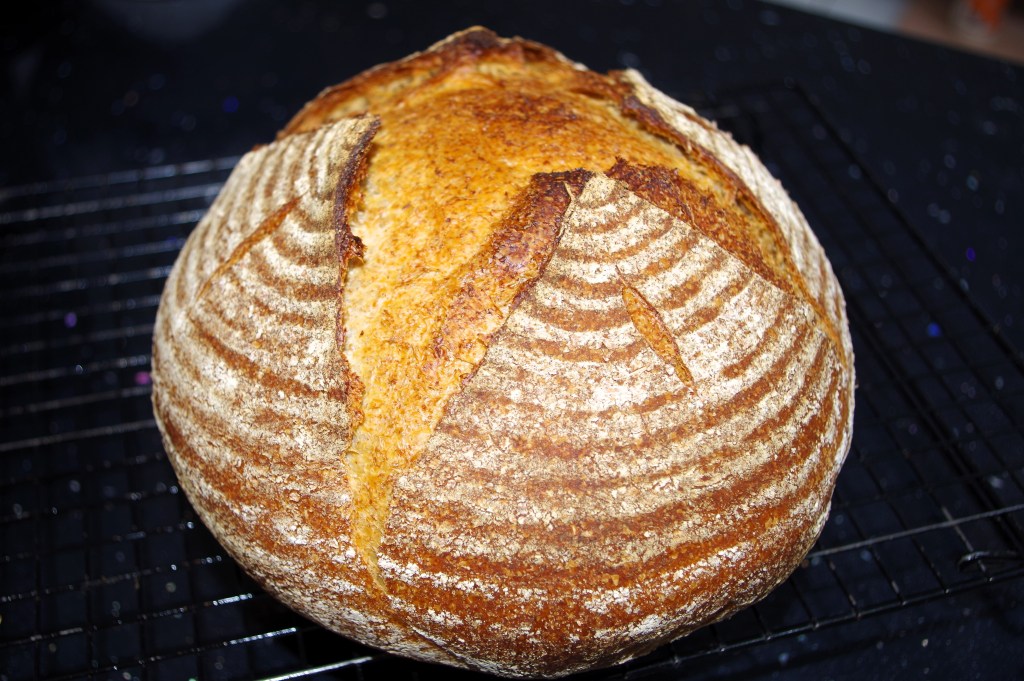
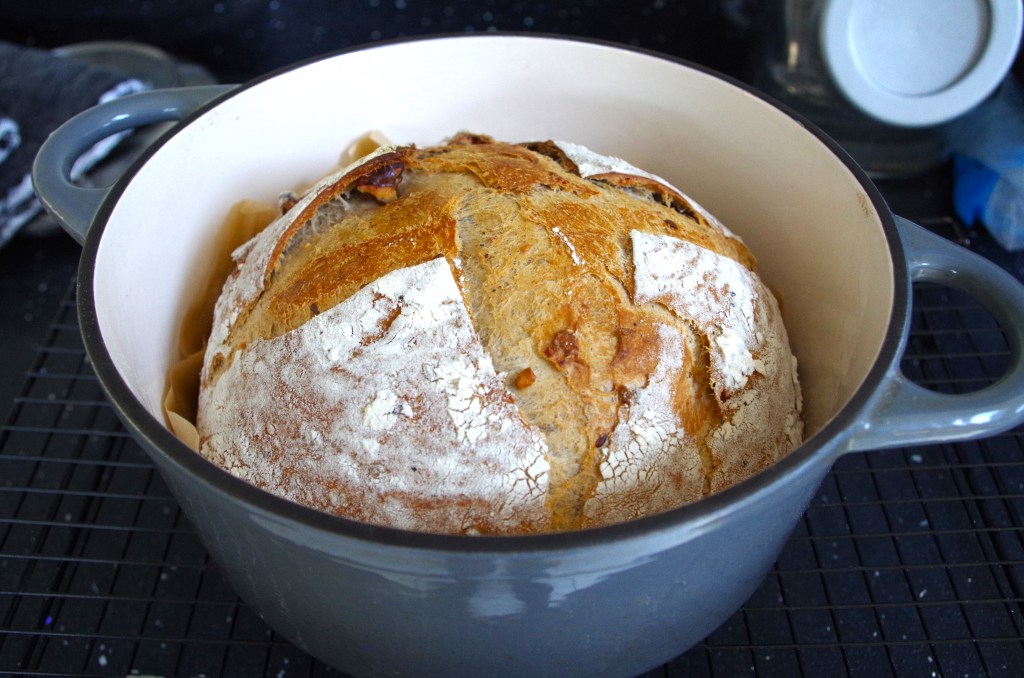
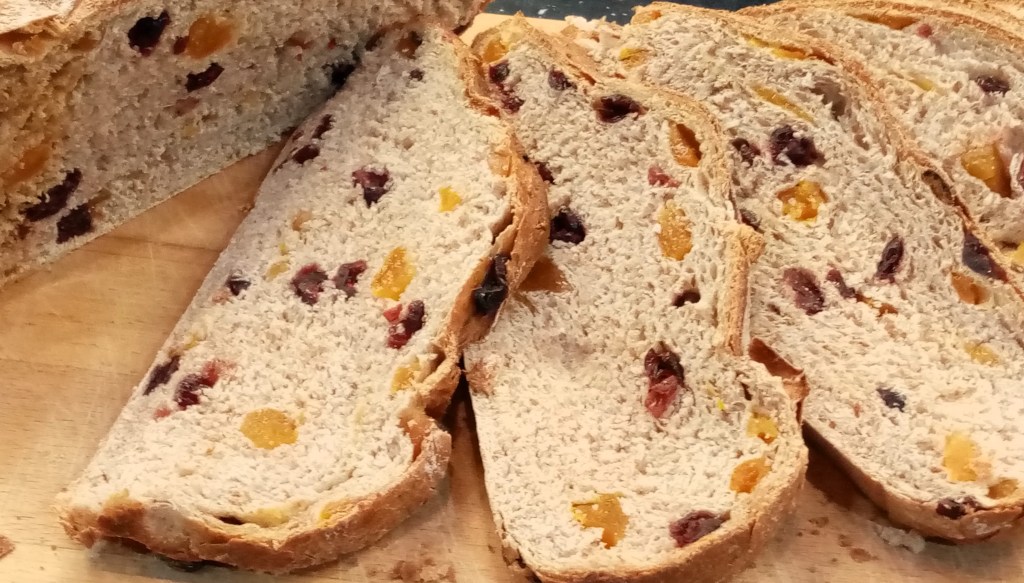
I’ve used the word “yeasted” in the title because I also make this as a sourdough. Either way it’s a good, hearty loaf with a lovely flavour. The crumb (the inside) is soft and squidgy and the crust is ….. very crusty!
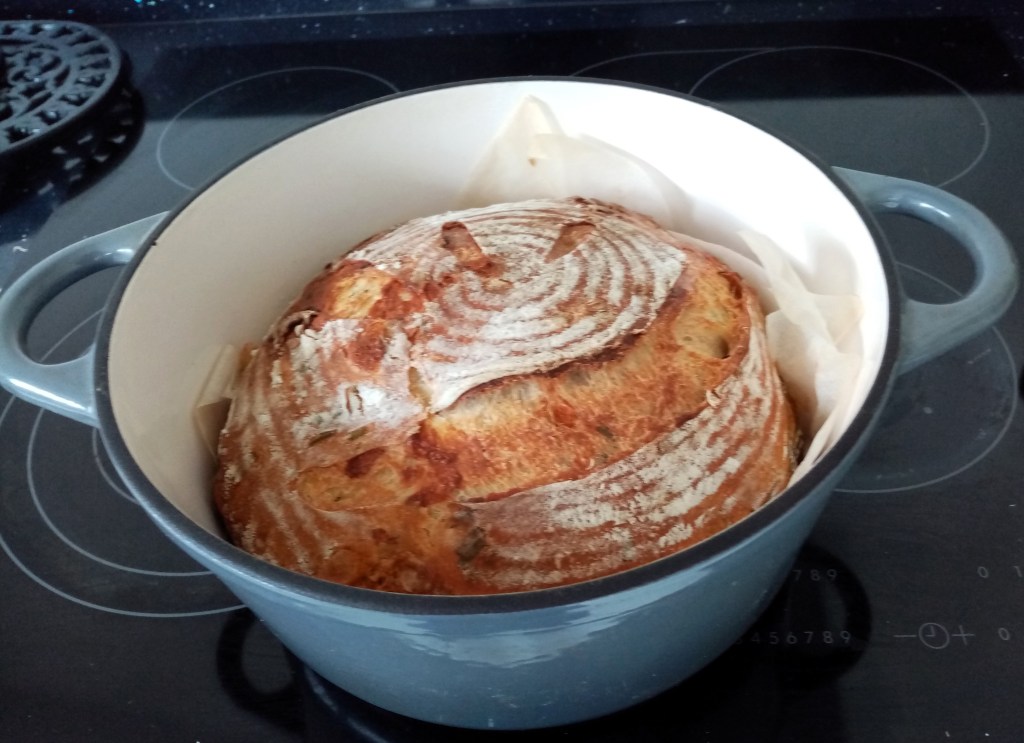
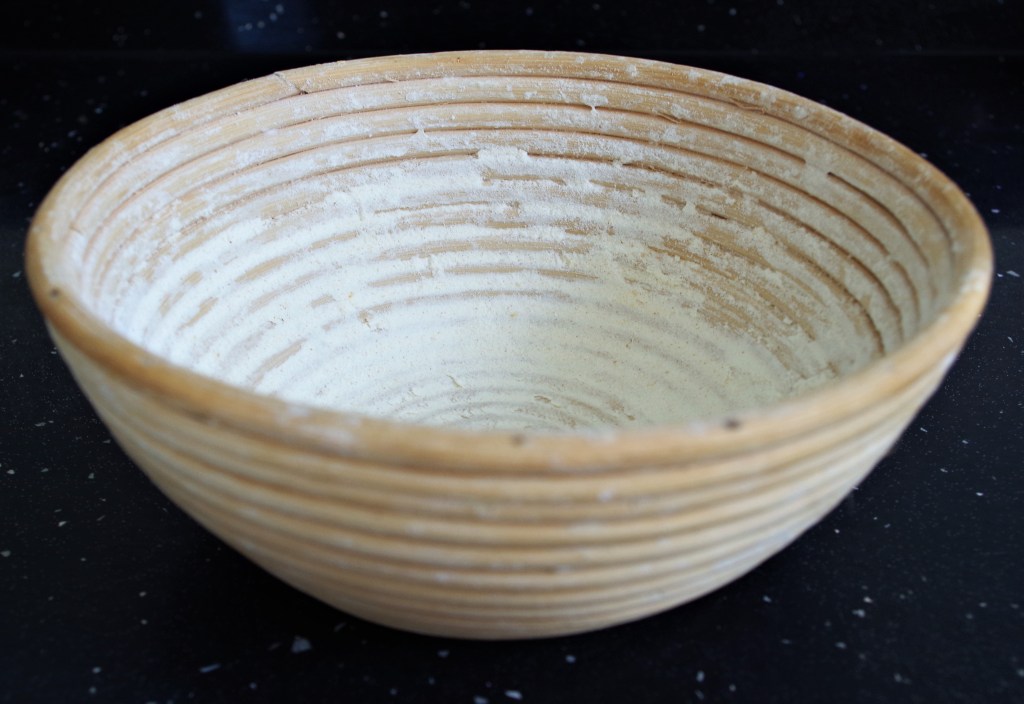
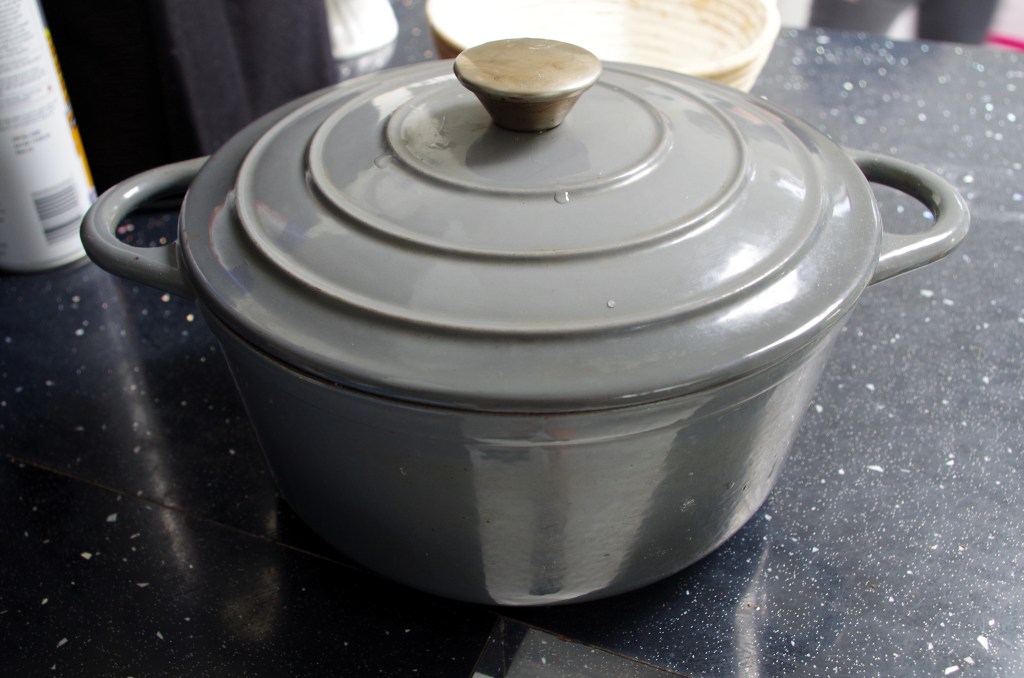
I often bake bread in a Dutch oven and use the “cold start” method. I recommend this; it gives excellent results. If you don’t have a Dutch oven then a lidded casserole dish will give reasonable results. I also use a banneton for the second prove, but if you don’t have one then use a medium sized bowl.

Equipment and equivalents
- For mixing the dough – Stand mixer bowl OR a large ordinary bowl
- For the first prove – a large bowl
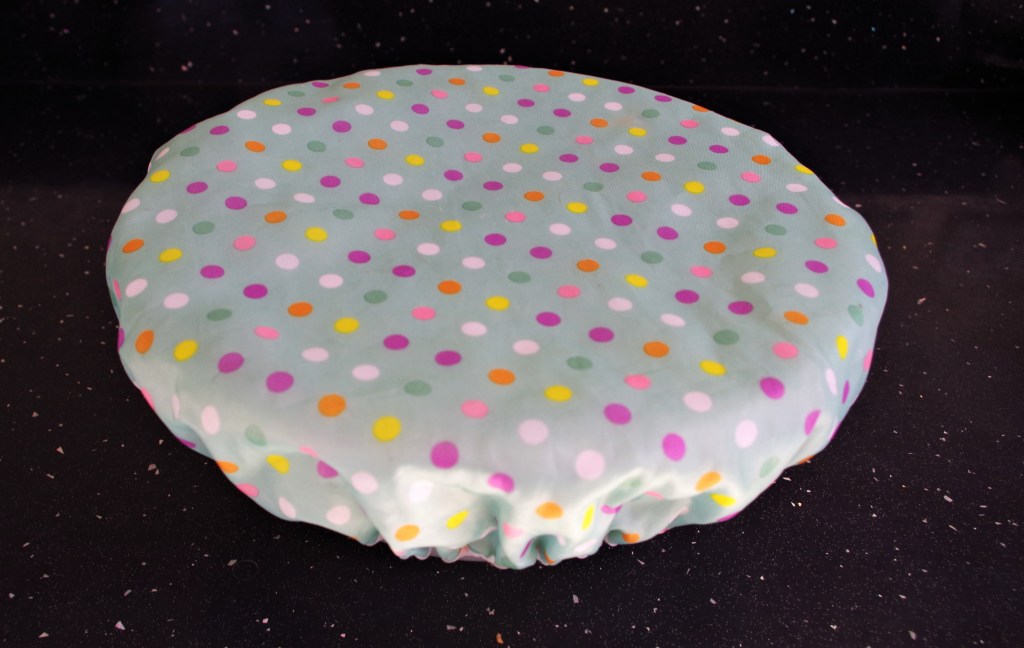
- For the first prove – a Shower cap OR cling film or a tea towel
- For 2nd prove – a Banneton OR a medium sized bowl
- For 2nd prove – a proving bag OR a white bin liner
- To bake – a Dutch oven OR a lidded casserole dish or a baking tray
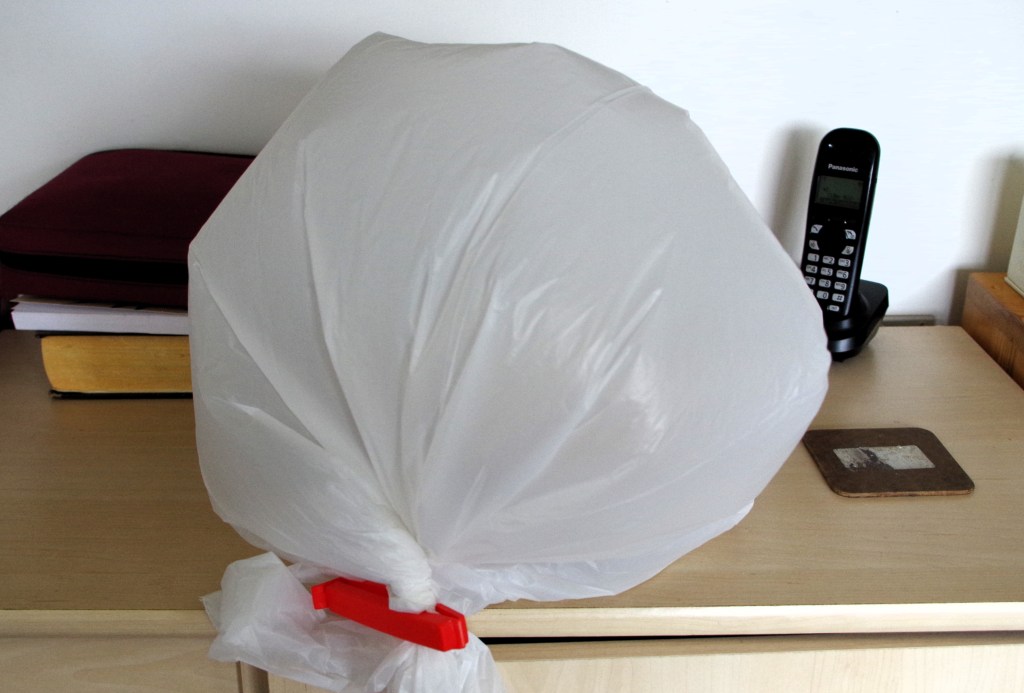
Times: In a warm room your first prove could be anything from 45 – 90 minutes; longer in a cold room. The second prove is likely to be shorter, but again it can be affected by cold. Also, a long proving time may be inconvenient, but it does improve the flavour of your bread.
Kneading: By hand will take 10 – 15 minutes of fairly vigorous work. In a stand mixer, using a dough hook, it will be ready in 7 – 9 minutes. There are all manner of styles for kneading by hand. The main thing is to pull, stretch and fold the mixture until you have a nice smooth ball of springy dough.

OK, enough intro. Let’s get on with it.
Ingredients
- 290ml – 300ml lukewarm water
- 20ml olive oil
- 2 – 3 Tbs black treacle (optional, but very nice)
- 7g dried/instant yeast
- 500g strong flour (I usually mix 350g strong wholemeal with 150g strong white or 300g/200g. 100% wholemeal gives a very heavy loaf.)
- 10g salt
Method
1. Pour the water, oil and treacle into the mixing bowl and stir well. The oil has to be “persuaded” to mix with the water.
2. Mix in the yeast then add the flours and salt. Mix well and form a rough dough. Knead well.
3. Place the dough ball into a lightly oiled bowl, cover and leave until risen to double the size.
4. Tip the risen dough out onto a lightly floured surface and knock out the air. Fold and shape it into a ball, dragging the outer surface taught with cupped hands.
5. Flour the banneton or a bowl lined with baking parchment. Flour the dough ball and invert it into the banneton/bowl. Place inside the proving bag for the second prove.
6. Cut a circle of baking parchment big enough to lift the dough ball into your Dutch oven. (Snip the edges so that they fold and overlap to fit when placed in the Dutch oven.) Place the dough ball inside.
7. Use a very sharp knife or razor blade to cut slashes on the top.
8. Place the Dutch oven (with the lid on) into a COLD oven and turn it on to 230°C / fan 210°C / 450°F / gas 8. Bake for 50 minutes then remove the lid of the Dutch oven, turn the oven down to 220°C / fan 200°C / 425°F / gas 7 and bake for a further 10 – 12 minutes, until the crust is dark and crispy.
9. Cool on a wire rack and resist the urge to cut & eat too early.
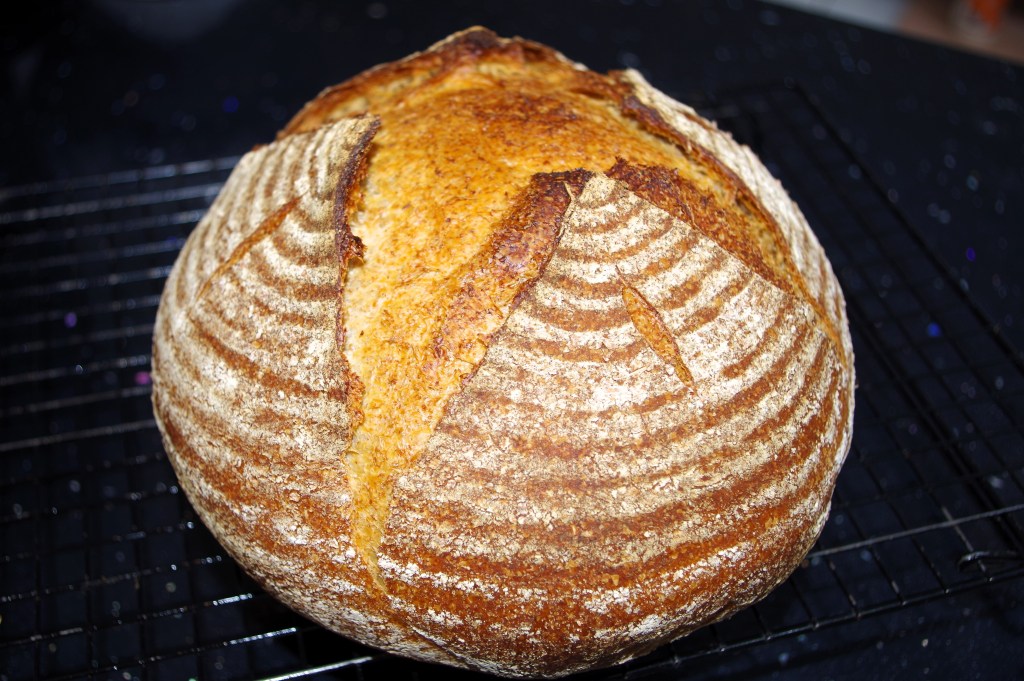
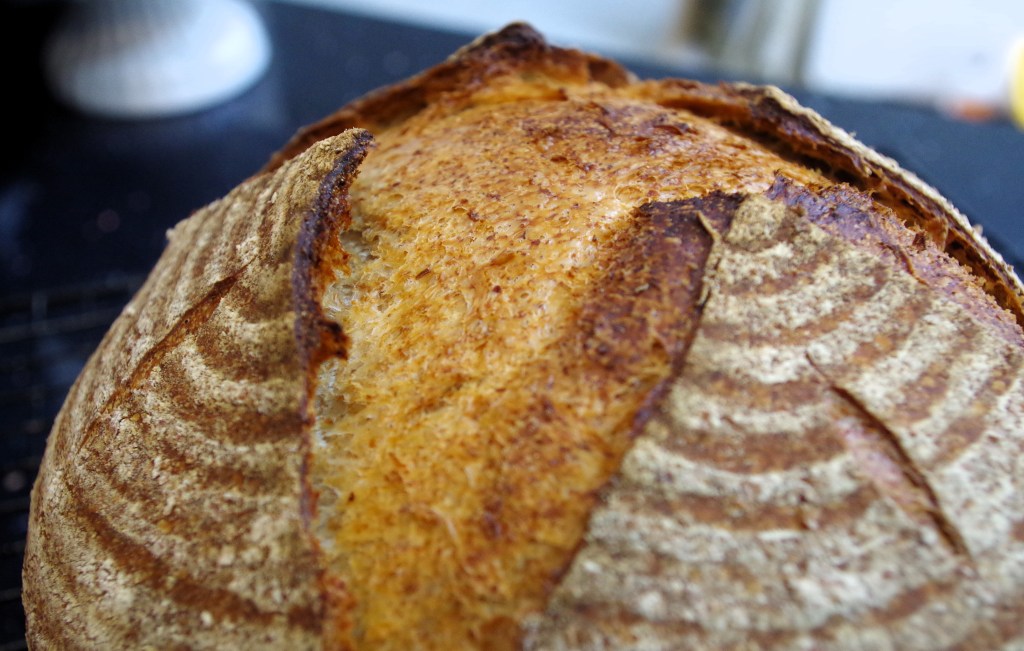
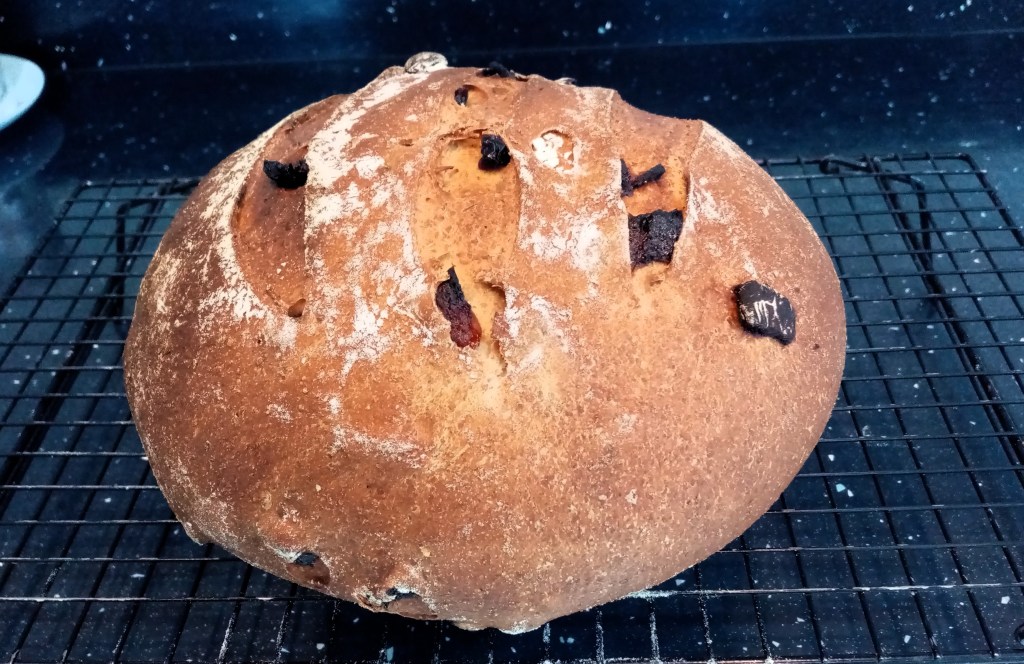
The images above are actually a sourdough version. If you’re a regular sourdough baker, here’s what I did: 250ml starter (mixed 50/50). Overnight first prove then about 5 hours second prove. The rest as above apart from reducing the flour and water to accommodate the starter..
I wish you every success with your bread making. I hope you have a go at this one and enjoy making and eating a lovely loaf. If you want to see more of my bread recipes click this link.
Here are some quite different breads that you might want to try:
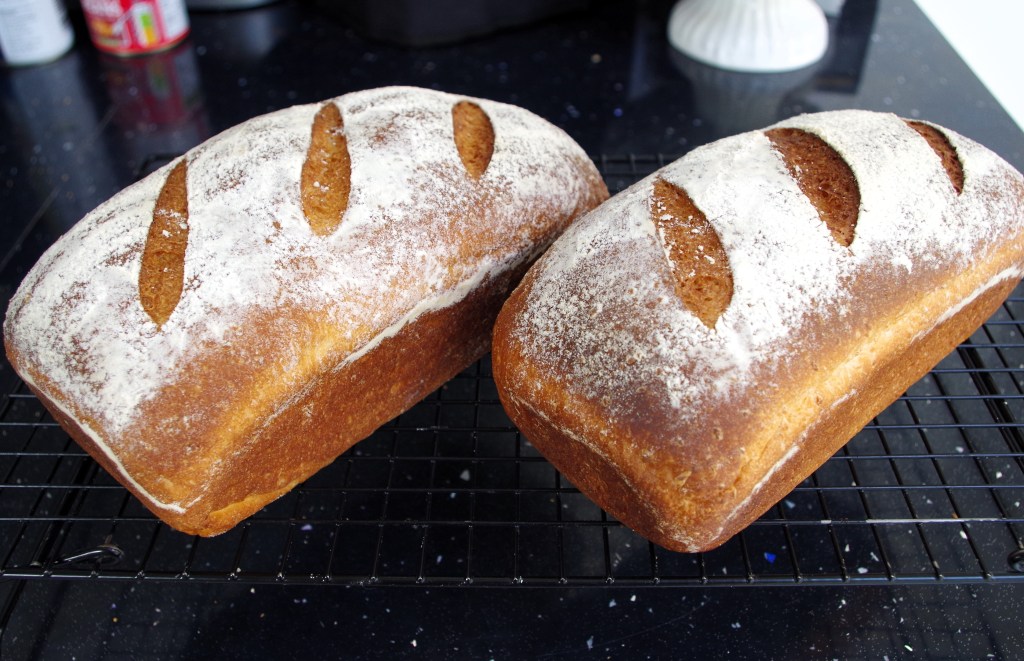
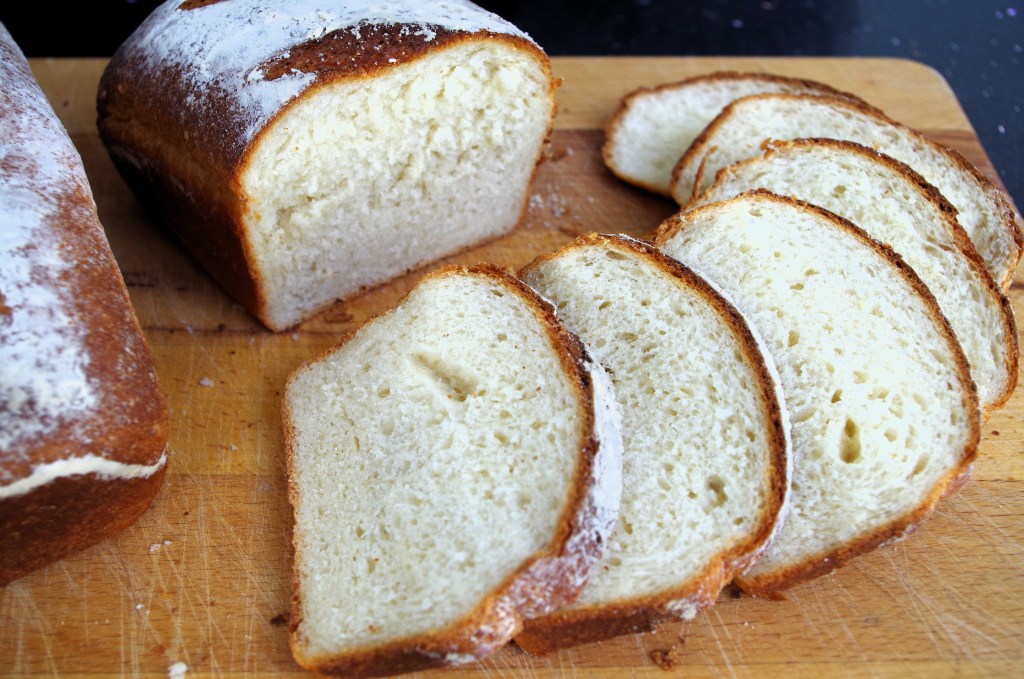

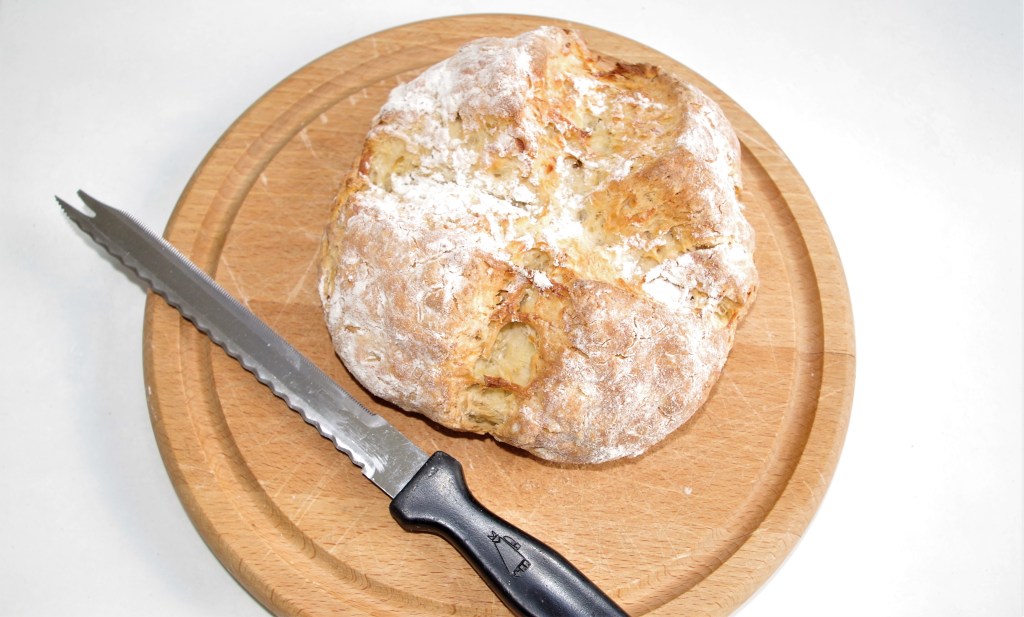

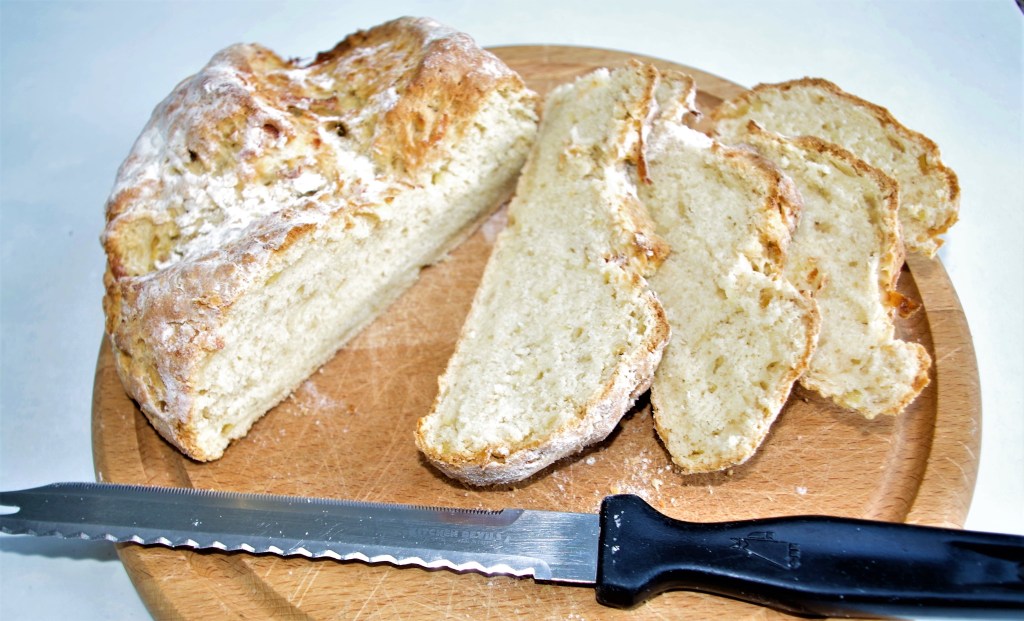
Rye & Wholemeal Apricot English Muffins
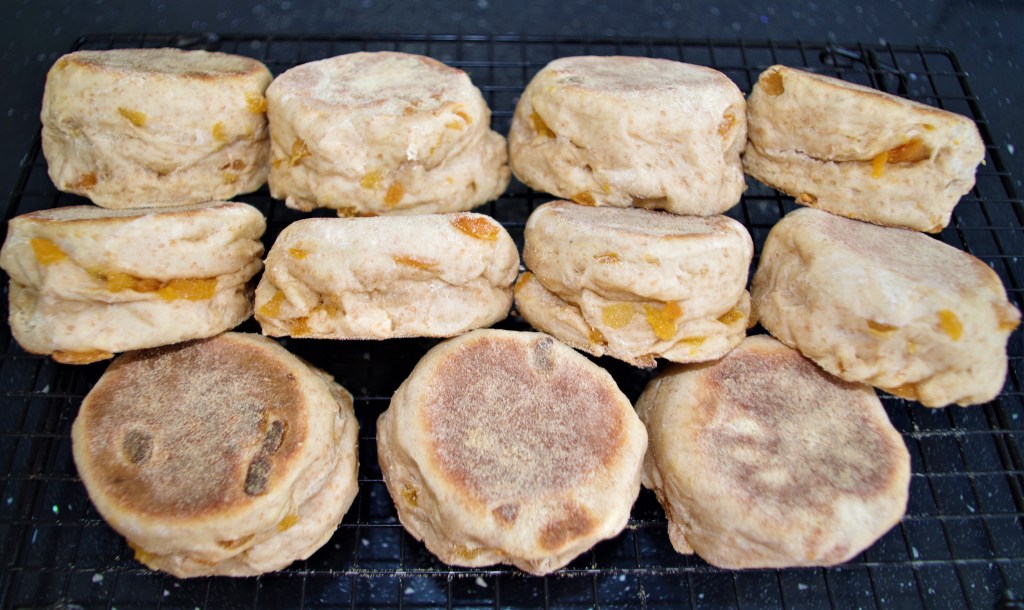
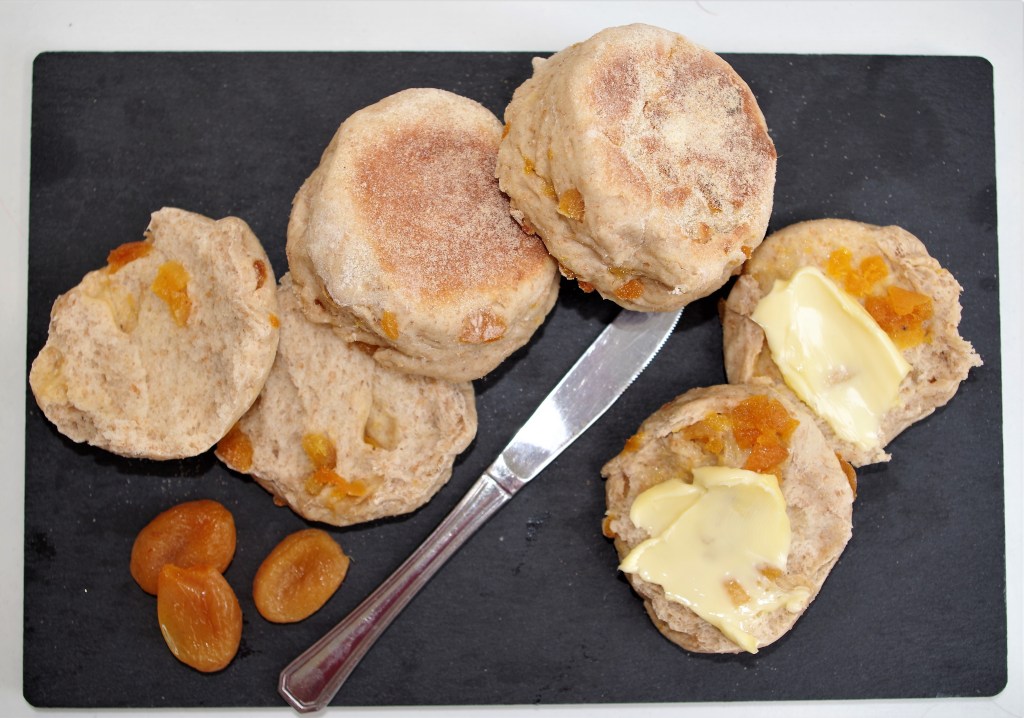

Focaccia con Mozzarella, pomodoro e aglio


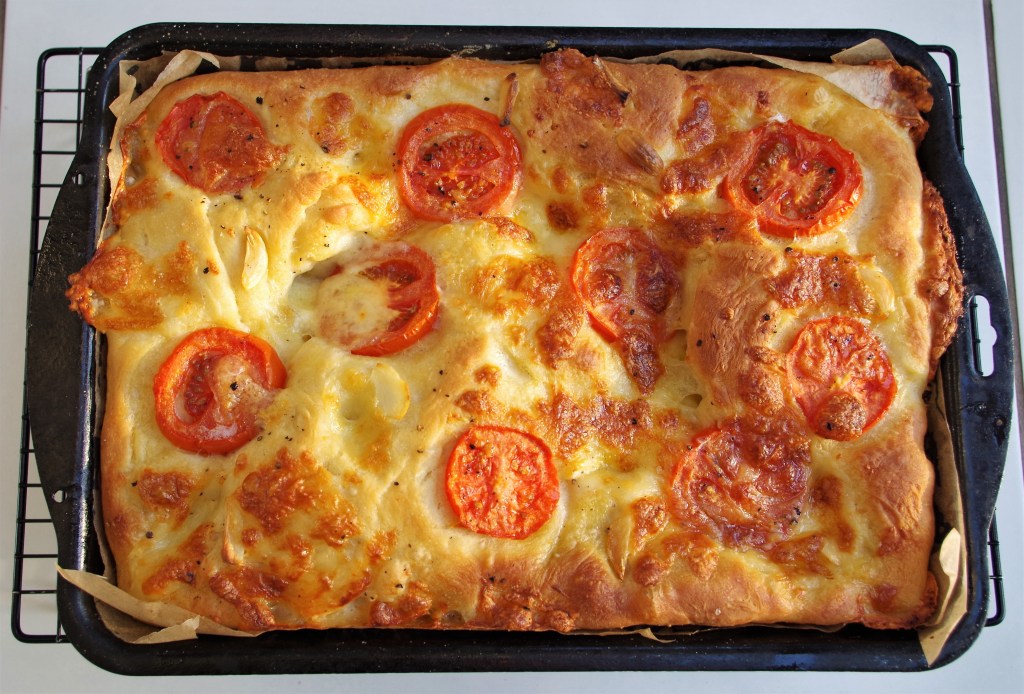
Spelt bread with Apricot & Cranberries
If you’d like to make a comment or ask a question please do, via the contact page.
 Retired Bloke on Food n stuff