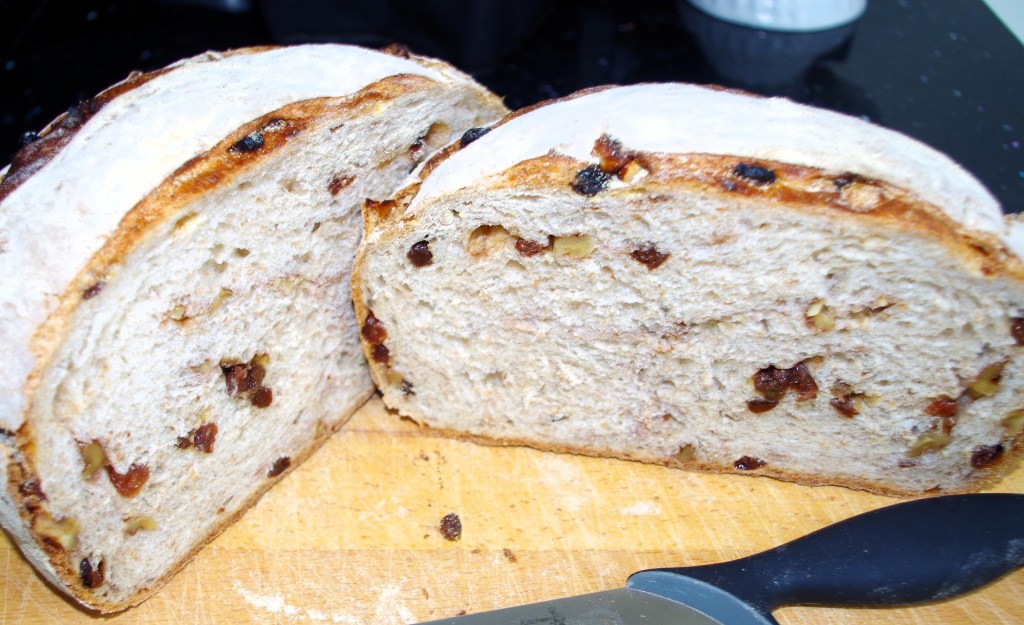
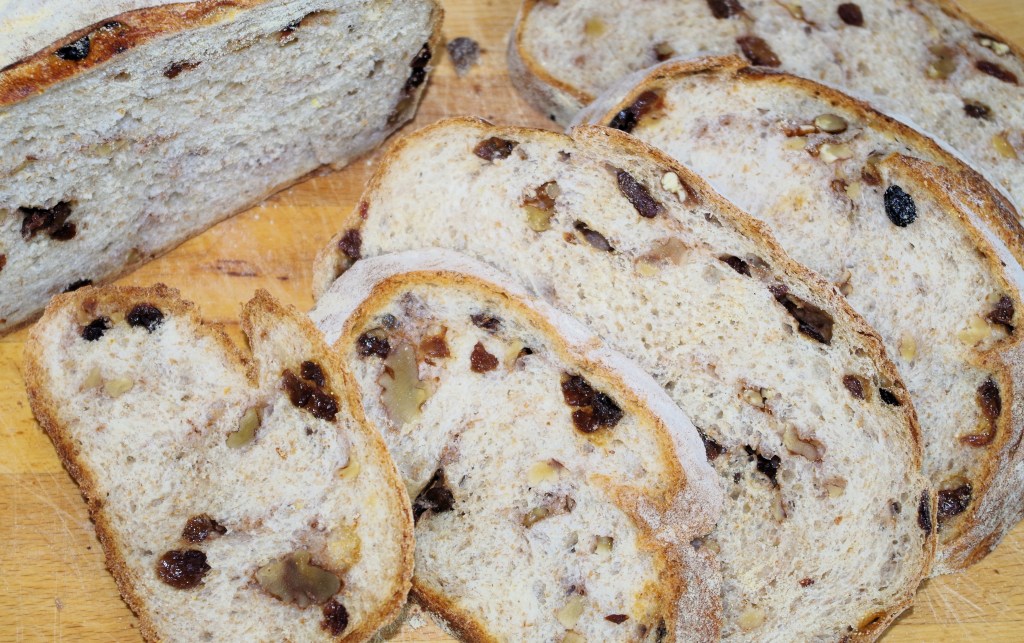
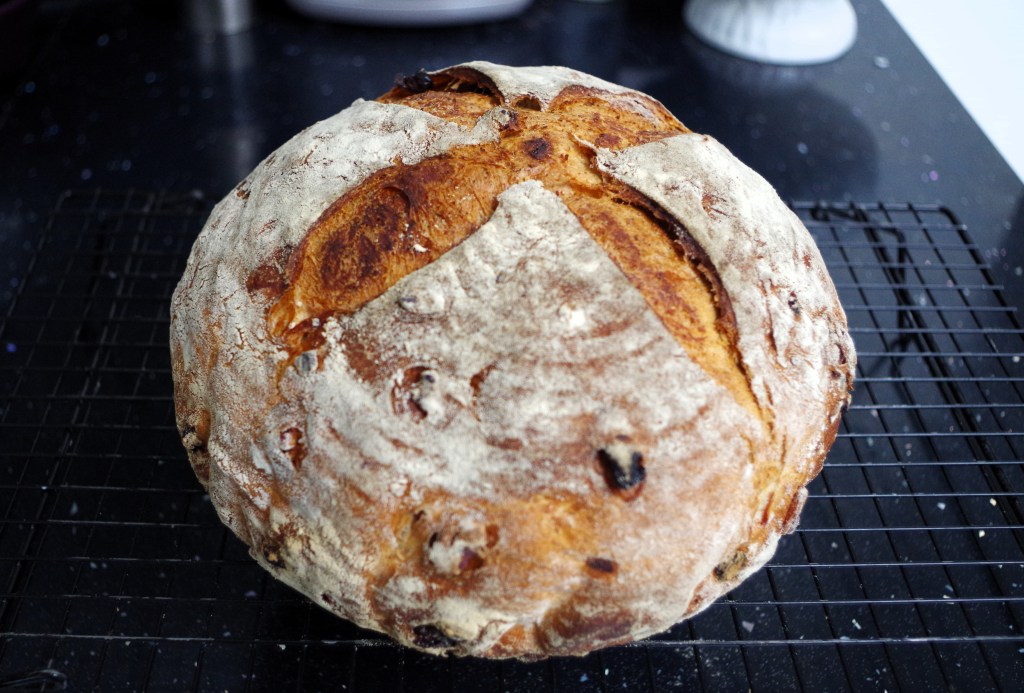
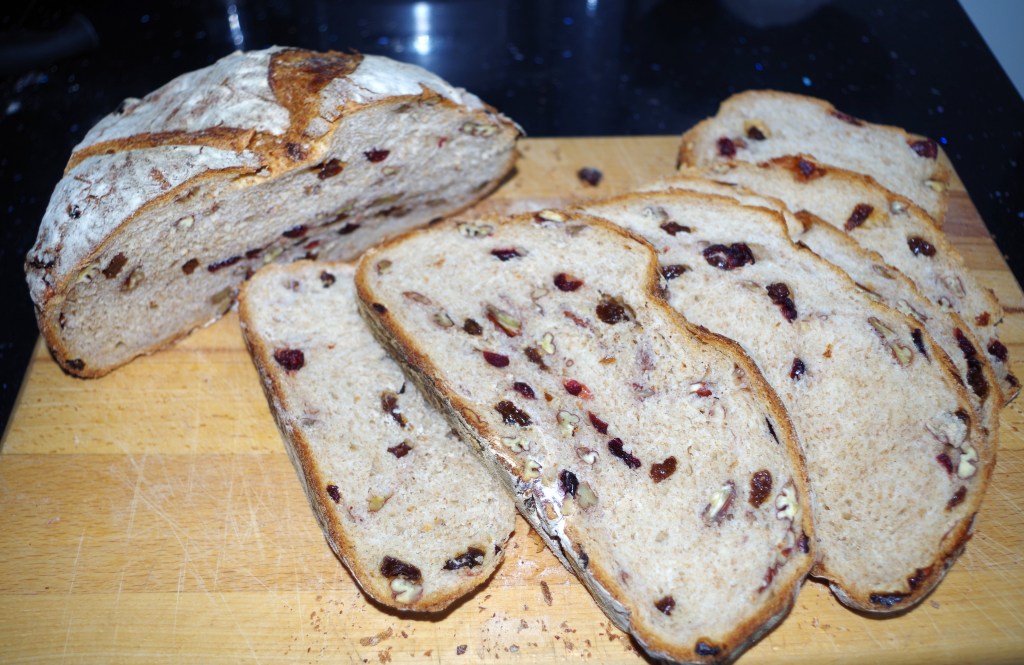
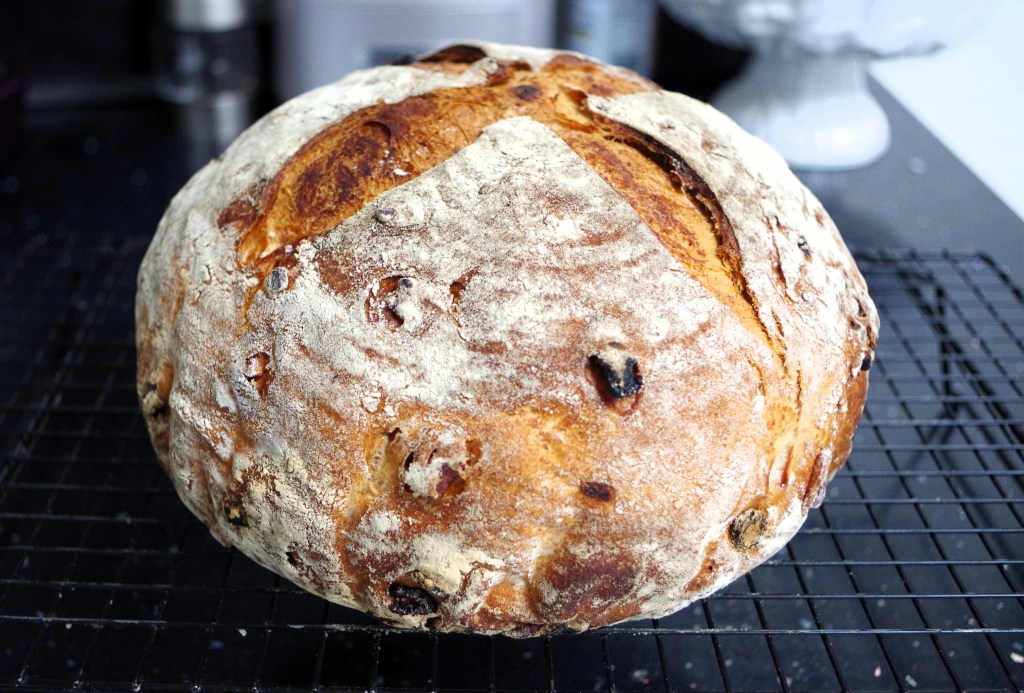
Here’s a yeasted loaf with a great texture and a lovely blend of flavours.

Makes: 1 loaf – about 12 large slices
Difficulty: Moderately easy
Time: 30 – 40 minutes prep./“hands-on” then 60 – 90 minutes first prove. Another 15 minutes “hands-on” then 30 – 40 minutes second prove. Oven time: 60 minutes.
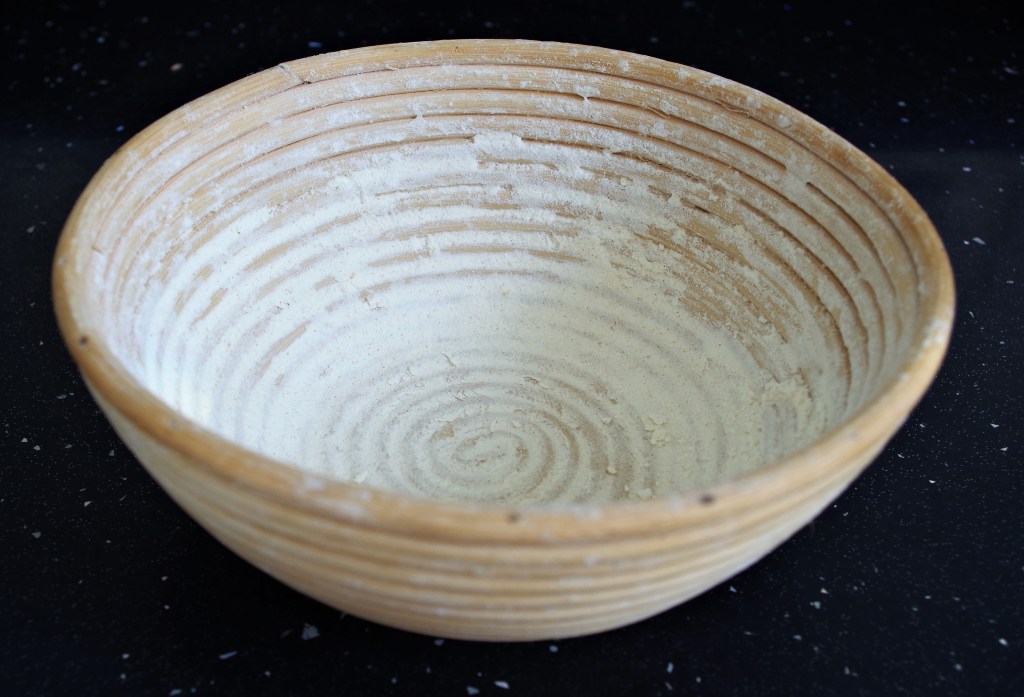
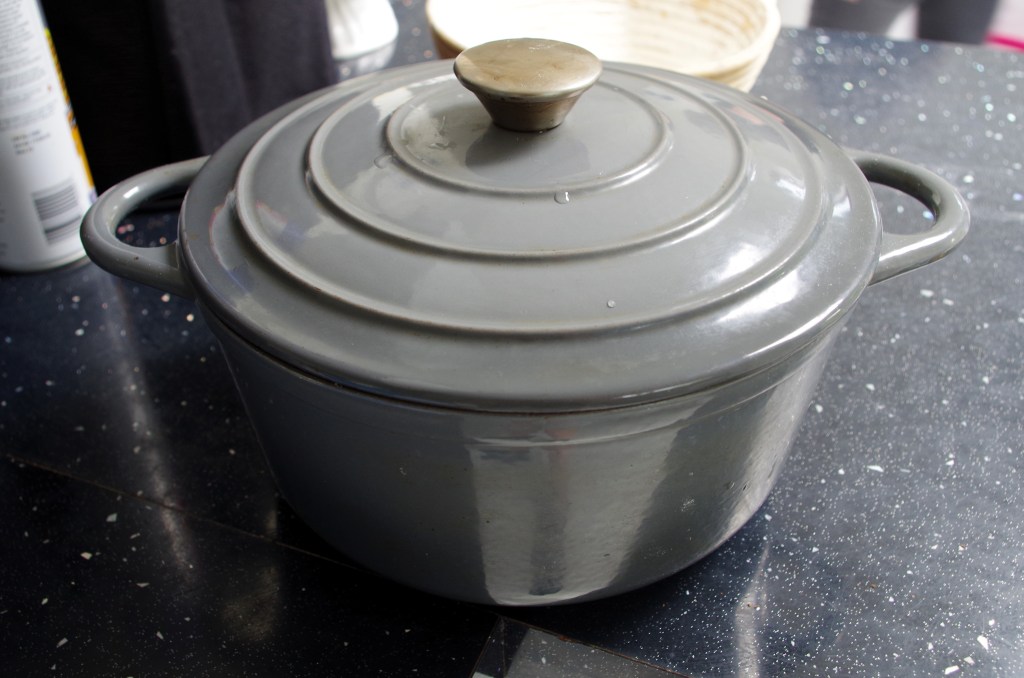
Need: A large bowl (or stand mixer bowl), a banneton (or a medium bowl), a Dutch oven (or a lidded casserole dish). A stand mixer is not essential, but very useful.

Ingredients
- 25ml – 30ml whisky
- 25g caster sugar
- 125g – 150g dried fruit (raisins, sultanas etc.)
- 175g strong wholemeal flour
- 350g strong white flour
- 7g fine salt
- 25g soft brown sugar
- 7g sachet of instant yeast
- A large orange
- About 275ml water
- 40g melted butter
- 75g – 100g small pieces of walnut
NB Don’t be put off by the inclusion of whisky, it doesn’t dominate the flavours. You could make it stronger by adding some into the liquid element, or it could be omitted altogether.
Method
1. Some time before making the loaf (maybe the night before) pour the whisky into a shallow bowl and warm it, then stir in the sugar. Once the sugar has dissolved add in the dried fruit. Cover and leave until needed.
2. In a large bowl, stir and mix the flours, salt and brown sugar. Stir in the instant yeast. Set aside.
3. Zest the orange onto a plate then squeeze the orange for its juice. Add water to the orange juice to create 325ml of liquid. Cover the zest with cling film for use later.
4. Melt the butter.
5. Make a well in the centre of the dry mixture then add most of the liquid plus the melted butter. Mix to make a dough. Add the rest of the liquid as/if required to create a wet, but not sloppy, dough.
NB If your dried fruit has not absorbed all of the whisky then you could replace some of the water with the left over whisky. (or, just drink it!)
6. Knead the dough (7 – 9 minutes in a stand mixer using the dough hook. At least 12 – 15 minutes by hand)
7. Transfer the dough to a lightly oiled bowl. Pull up the edges of the dough and fold them over to the middle a few times, turning the bowl as you do this. Invert the dough ball, cover the bowl and leave to prove until doubled in size – about 90 minutes depending on room temperature.
8. Tip the dough out onto a lightly floured surface. Stretch or roll it out then spread over the dried fruit, walnut pieces and orange zest as evenly as possible.
9. Fold or roll the dough into a ball, dragging the sides down to tighten the surface. Flour the top and invert the dough ball into a well-floured banneton.
10. Place the banneton into a proving bag (bin liner) and leave to rise again – about 40 minutes depending on room temperature.
11. While the dough is rising, cut a roughly circular piece of parchment big enough to more than cover your banneton. Snip a few cuts around the edges. When the dough has risen, place this over the dough and invert the dough onto the parchment.
12. Use the parchment to lift the dough into a Dutch oven. Use a razor blade or very sharp knife to cut slashes.
13. Put the lid on the Dutch oven and place it into a cold main oven. Turn the oven on to 220°C / fan 200°C / 425°F / Gas 7 and leave the dough in for 50 minutes. After this time, remove the lid and bake for a further 10 minutes. To test if the loaf has baked, tap it firmly and listen for a hollow sound.
14. Place the baked loaf onto a wire rack to cool.
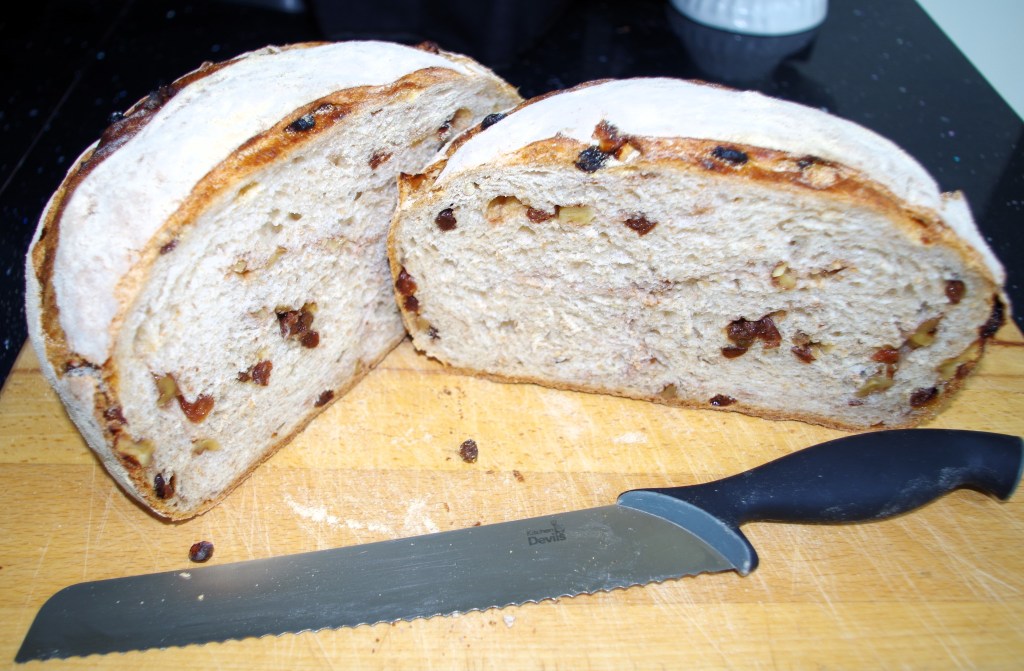
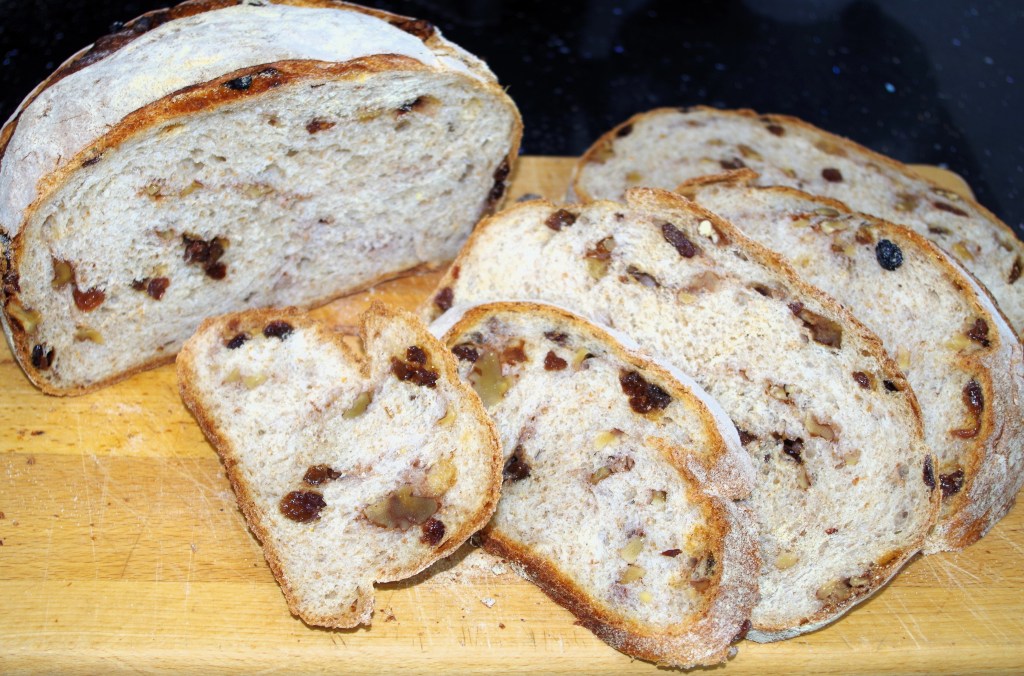
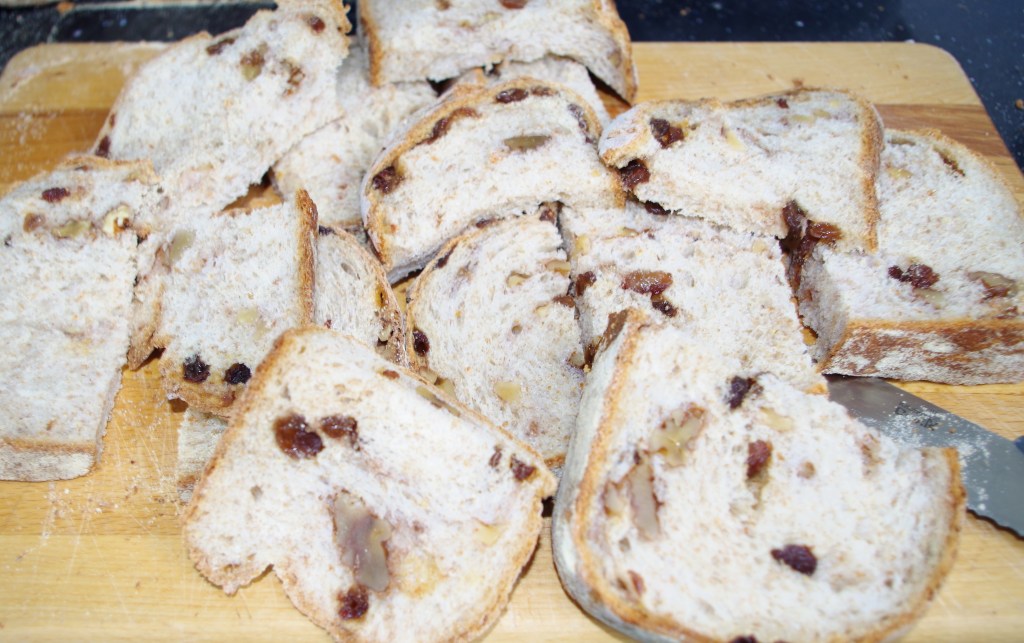
I wish you every success with your bread making. I hope you have a go at this one and enjoy making and eating a lovely loaf. If you want to see more of my bread recipes click this link.
Here are some quite different breads that you might want to try:
Blue Cheese and Pear Rustic Loaf
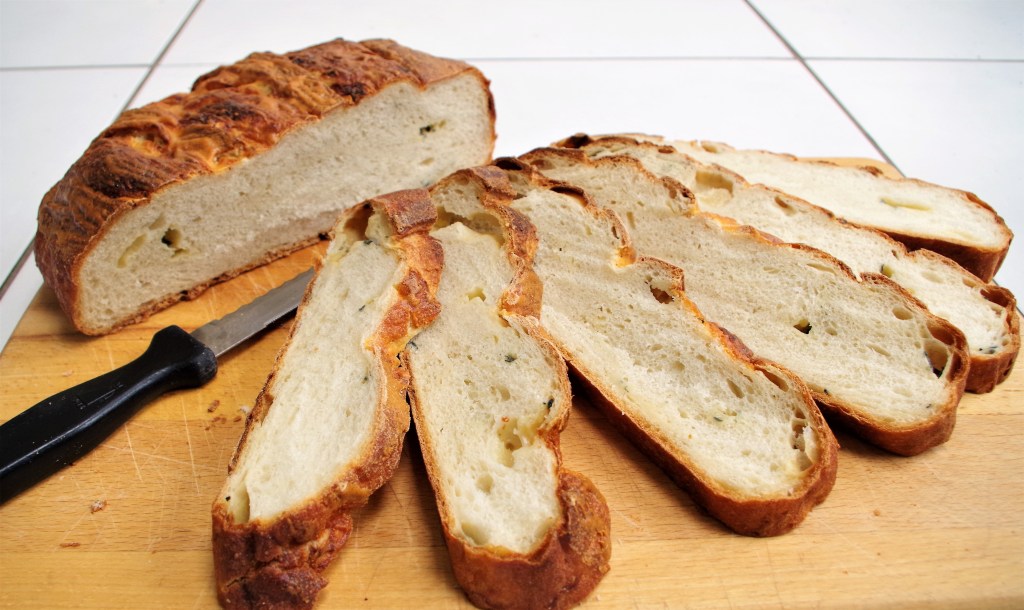


Double Cheese and Chive Sourdough

Maple, Pecan & Cranberry Bread
If you’d like to make a comment or ask a question please do, via the contact page.
 Retired Bloke on Food n stuff