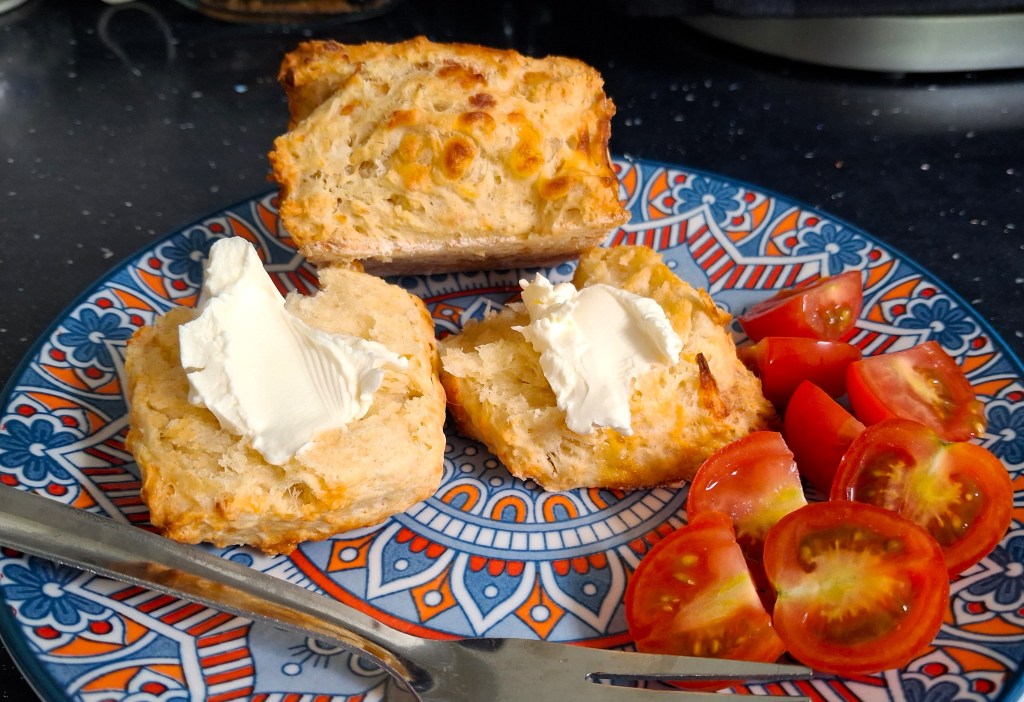
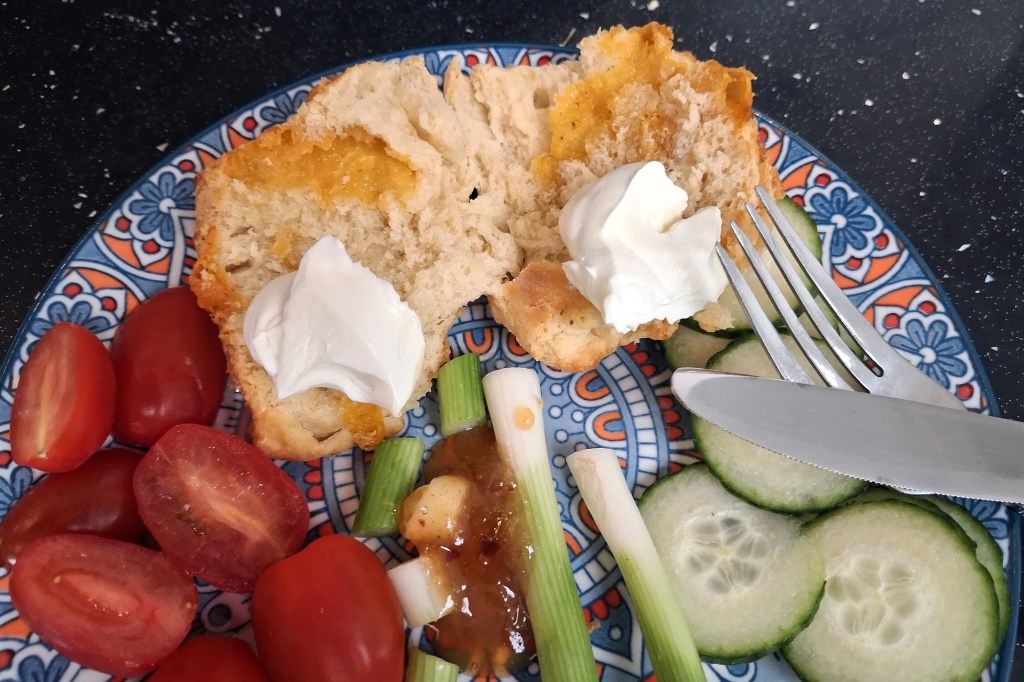
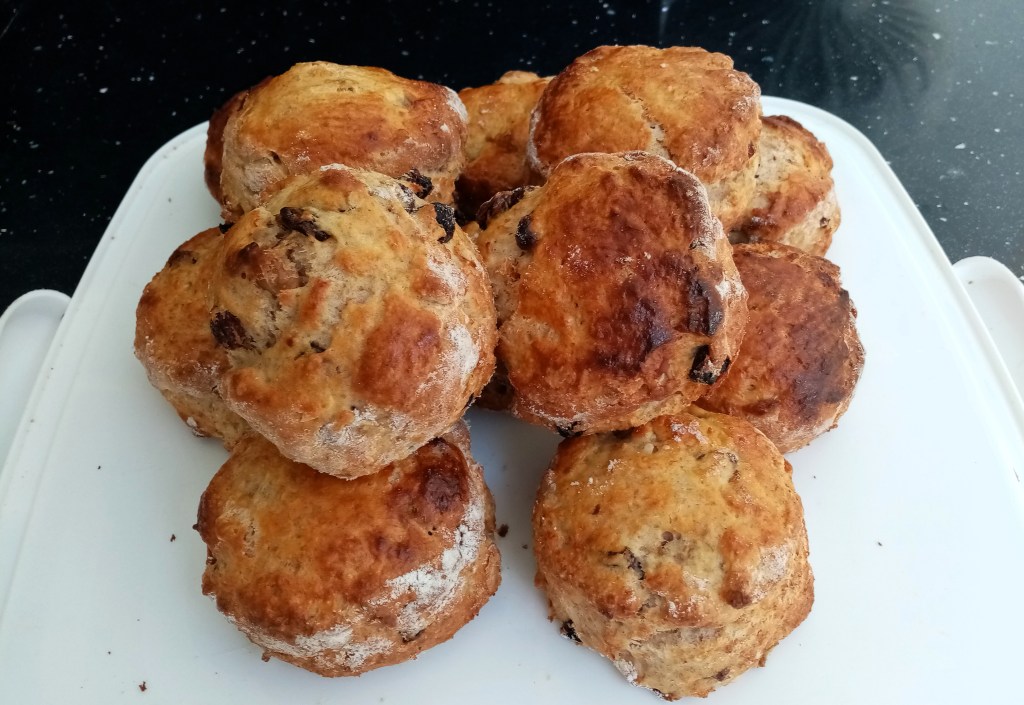
The scones shown here are something of an ongoing experiment, but don’t let that put you off. They are super already, otherwise I wouldn’t be telling you about them. Actually, I’m not sure that they should be called scones, hence the title. They’re a delicious cross between scones and puff pastry and very similar to American “biscuits”. Believe me, it works. But this is an open ended recipe, so have a go, add your own “tweeks” and flavours, enjoy the results and let me know!
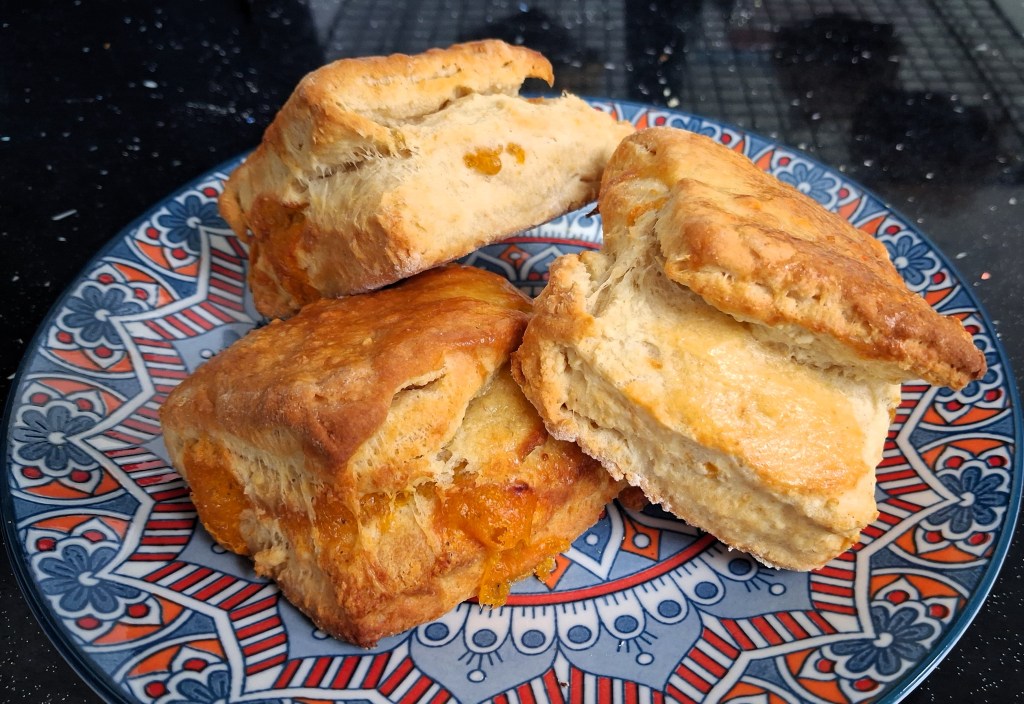
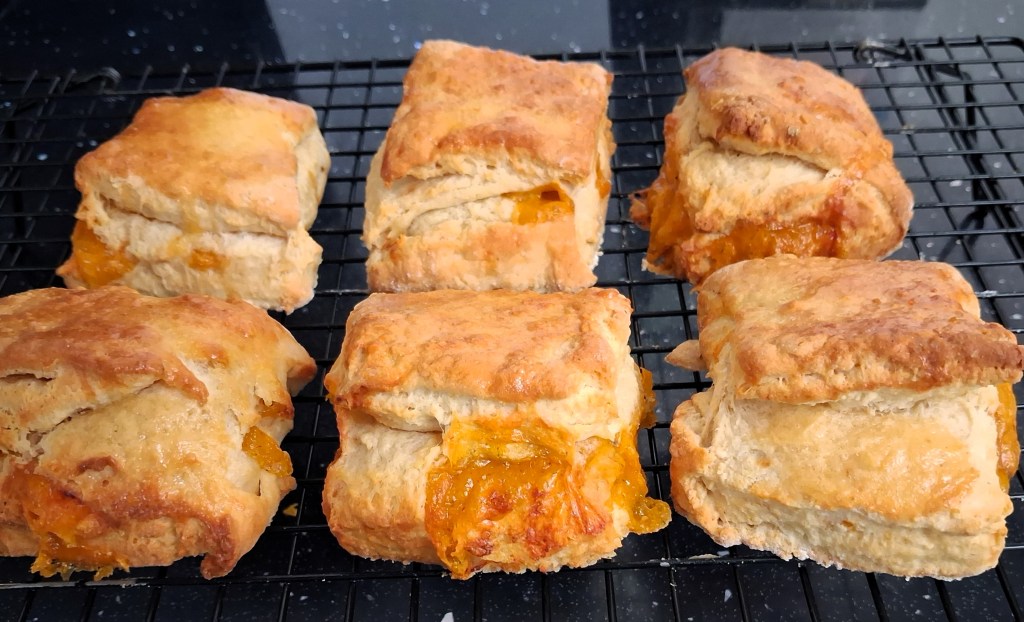
Makes: 12 squarish scones, but you could use a cutter for round ones
Level: Reasonably easy, but not a “beginner’s bake”
Time: About 30 minutes preparation then 17 – 20 minutes baking
Need: For this I used a food processor, but it works OK by hand with just basics: a large bowl, a cutter, baking trays, wooden spoon etcetera.
Ingredients
- 500g/18 oz strong white flour or use plain or mix half and half
- 30g/1 oz Baking powder
- ¼ tsp salt
- 1 tsp mustard powder (optional, but good)
- 60g/2 oz cold butter, in small pieces
- 25g/1 oz frozen butter
- 125g/4.5 oz grated hard cheese (Cheddar, Red Leicester etc.)
- 300ml/10.5 fl oz liquid (1½egg + buttermilk/milk)
- 2 medium eggs, beaten ( 1½ in the mixture, ½ for glazing)
Method
Pre: The day before you bake, put at least 25g butter in the freezer. On baking day, break the eggs and lightly whisk. Set about a quarter aside for glazing later. Use the remainder as part of the liquid for the dough. Add the buttermilk or milk to bring it up to the required 300ml. Set that aside too.
1. Line two baking trays with parchment and dust lightly with flour. The oven needs to be at 220°C / 200°fan / 425°F / Gas 8, but you may want to chill and rest the scones in the fridge during preparation so, wait a while rather than waste gas or electricity; aim to have your oven hot enough by stage 9.
2. Put flour, baking powder, salt & mustard powder into the food processor bowl & pulse to mix.
3. Add in the pieces of cold butter and pulse/mix until it becomes breadcrumb consistency. Stir in about 90g of the grated cheese.
4. Mix in 300ml liquid. Bring the mixture into a loose “clump”. Don’t over mix.
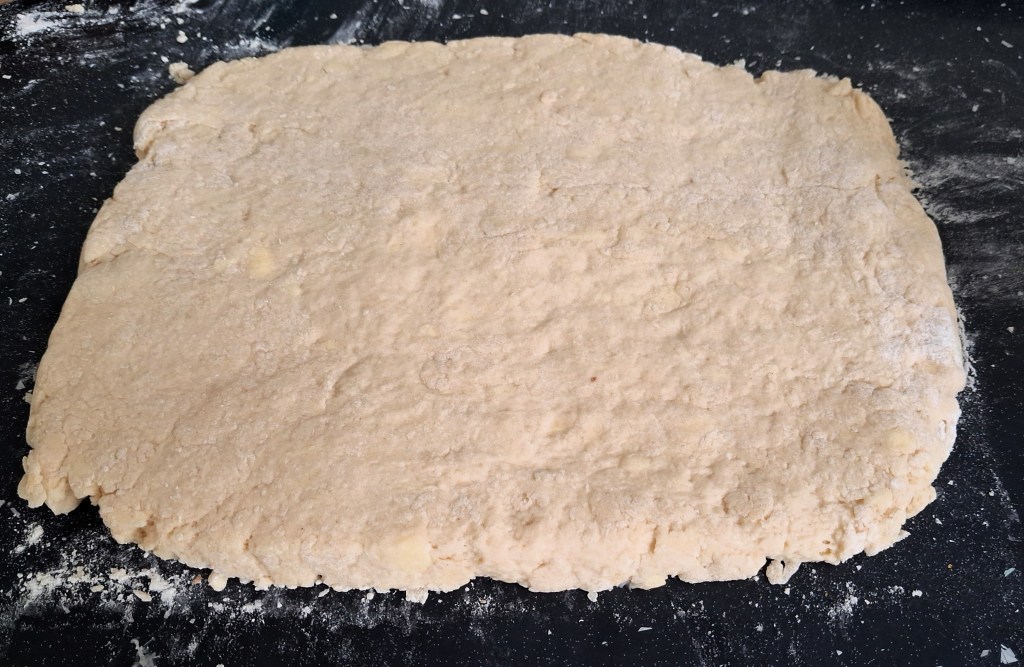
5. Tip the clump onto a lightly floured surface. Bring it together into a ball and roll out to about 15mm (½”) thickness, as rectangular as possible.
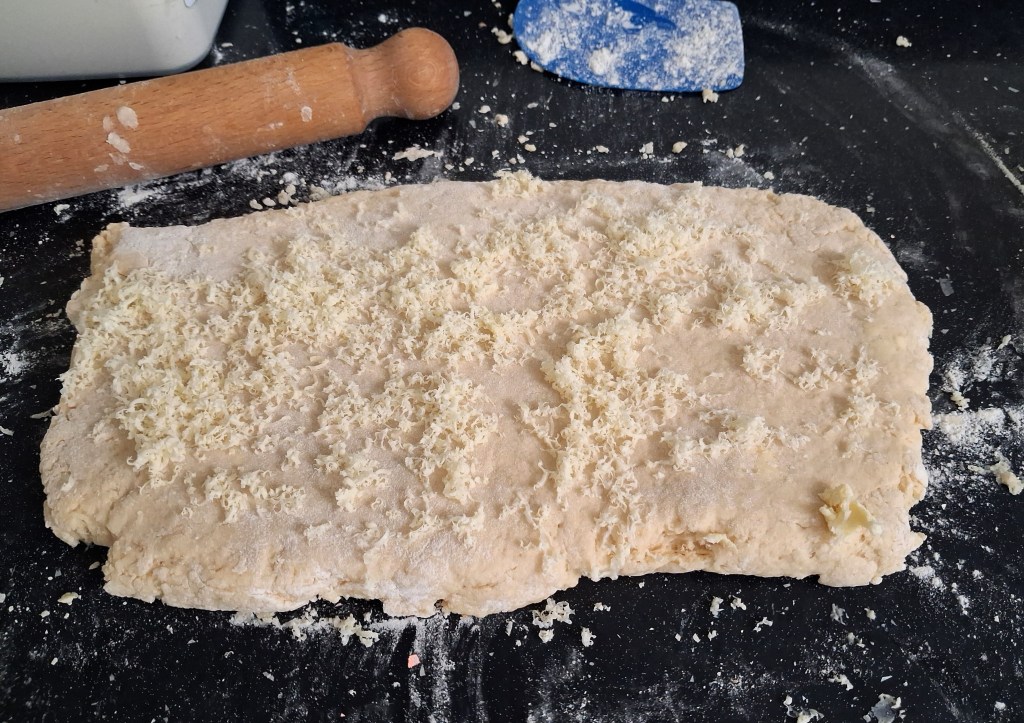
6. Grate a third of the frozen butter over the middle third of the rectangle. Fold another third over and grate more of the butter on top. Now fold over the remaining third. Lightly flatten with a rolling pin then wrap in cling film and pop it in the fridge for 15 minutes.
7. Roll it out again and repeat the above procedure, adding the remaining grated cheese with the grated frozen butter.
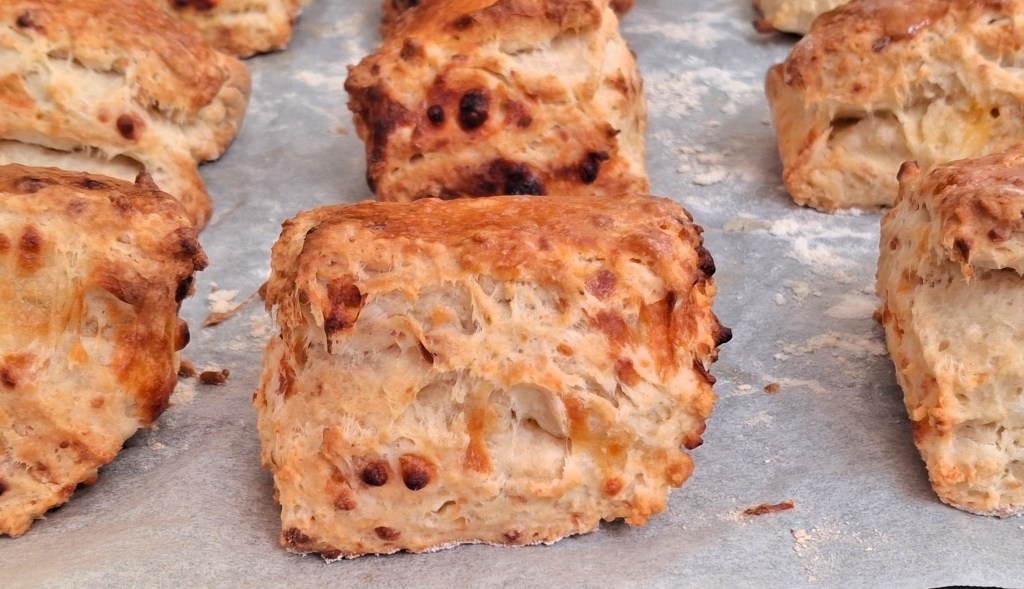
8. Cut into square scones. Put them apart on the trays. Brush them with the remaining beaten egg.
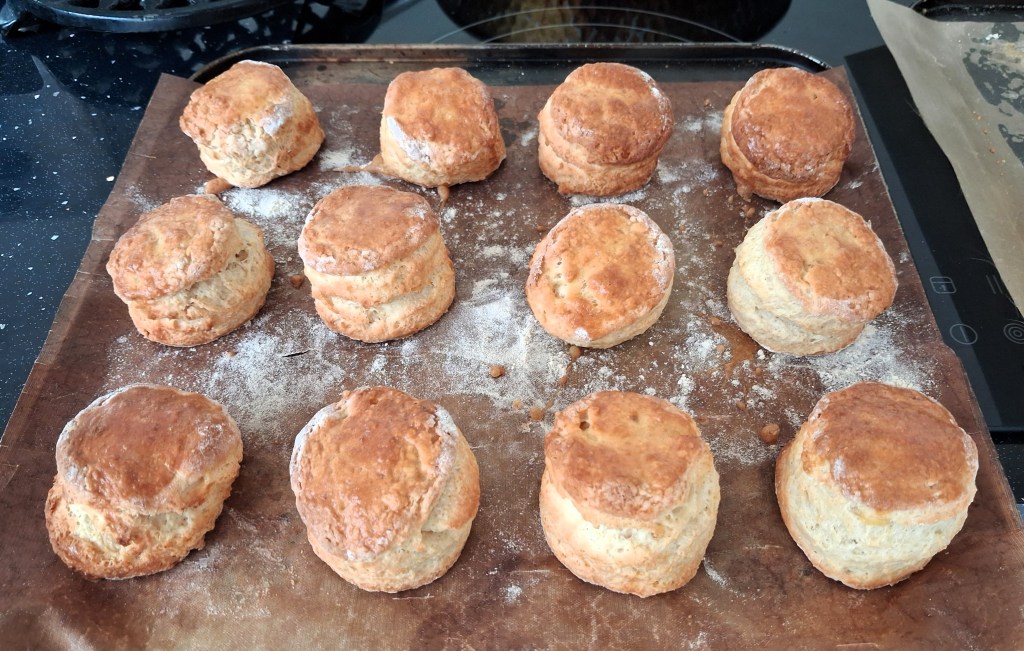
9. Bake for about 17 – 20 minutes. (I bake them for 9 minutes then swap the trays onto different shelves and turn them around, then bake for another 9 or 10 minutes. (The “experts” say you shouldn’t do this, but I think it’s worth it. I move sharpishly and sometimes I even give them a second egg wash. It’s your choice.)
10. Cool on a wire rack.
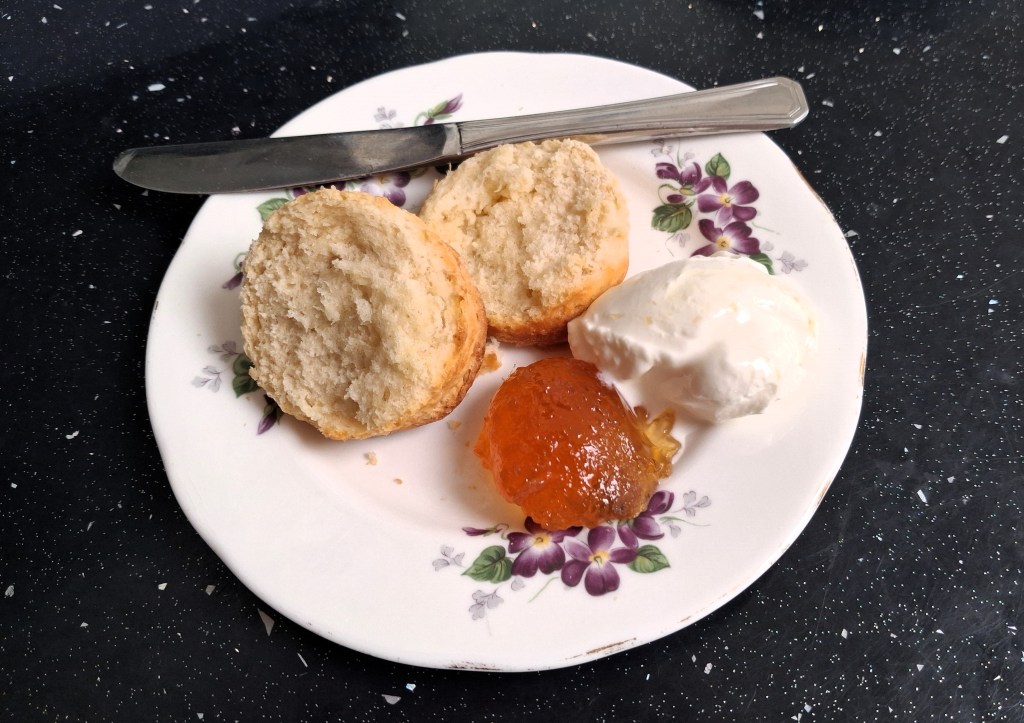
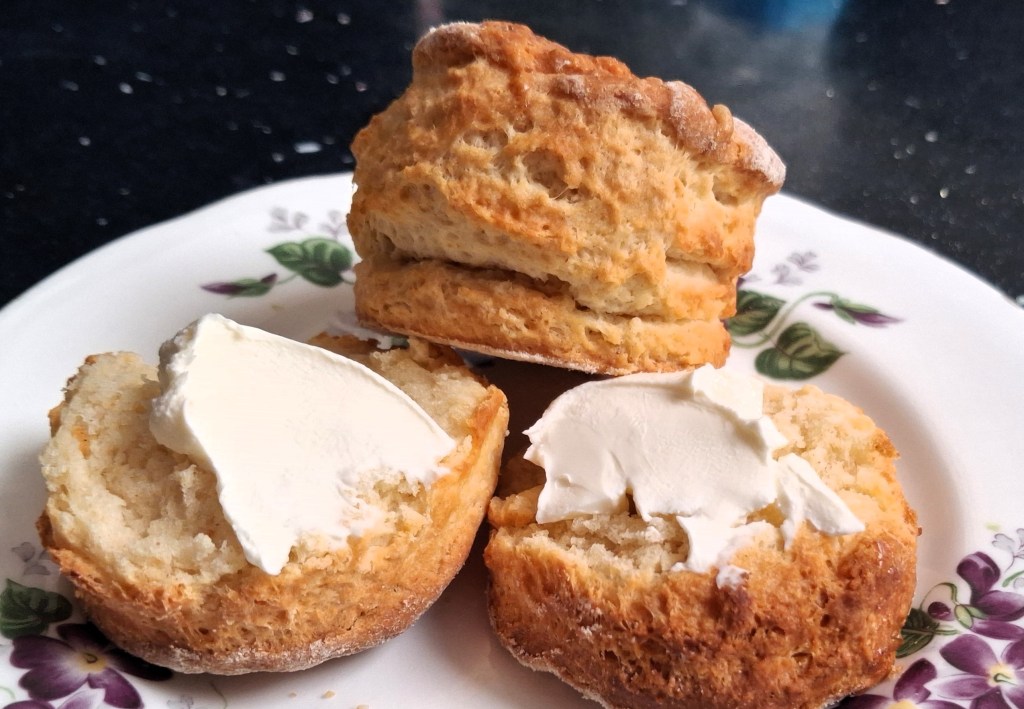
Gallery 1 (An earlier version – small plain scones)
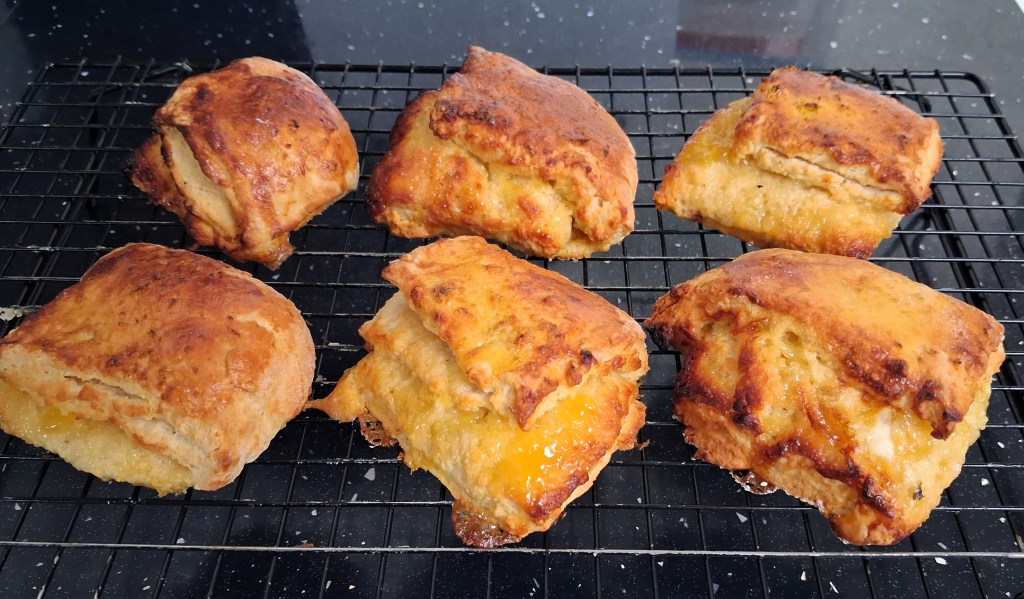
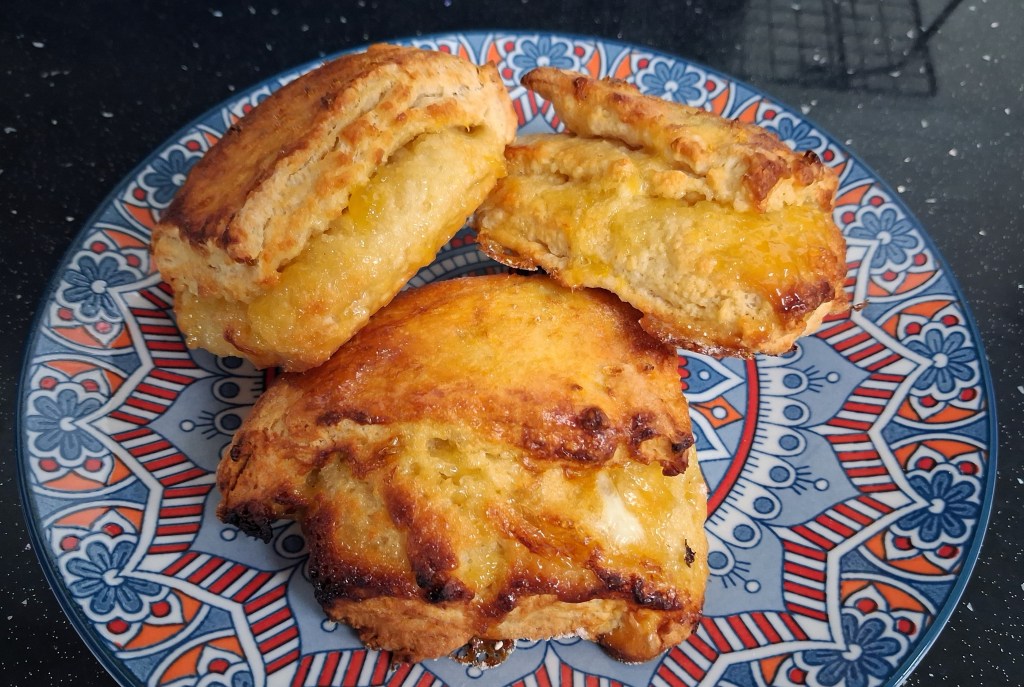
Gallery 2 (Another earlier version – larger with lemon curd)
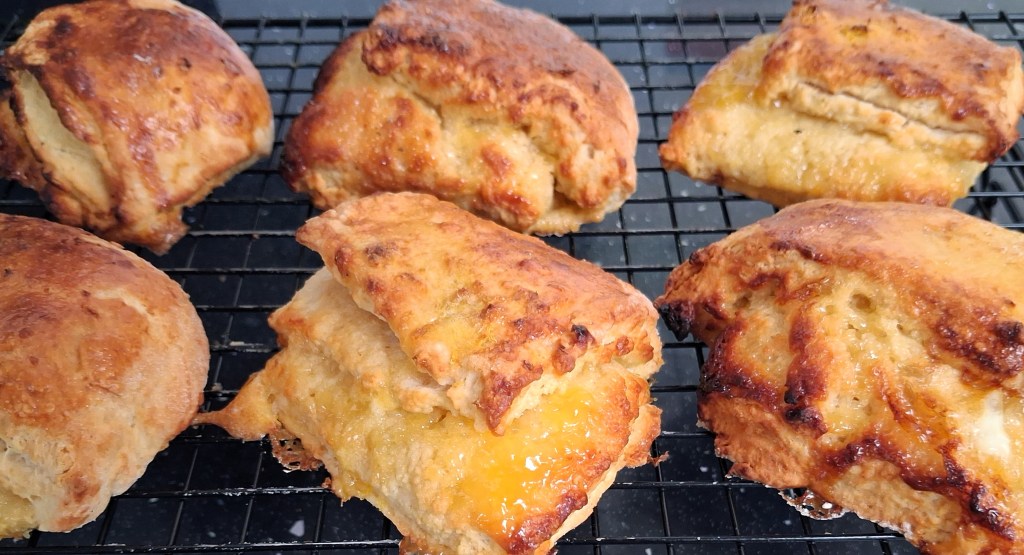
I hope you enjoy baking and eating these rather special scones. For scone recipes that are more traditional click here, or look below at just a few my scones that you might like to try:
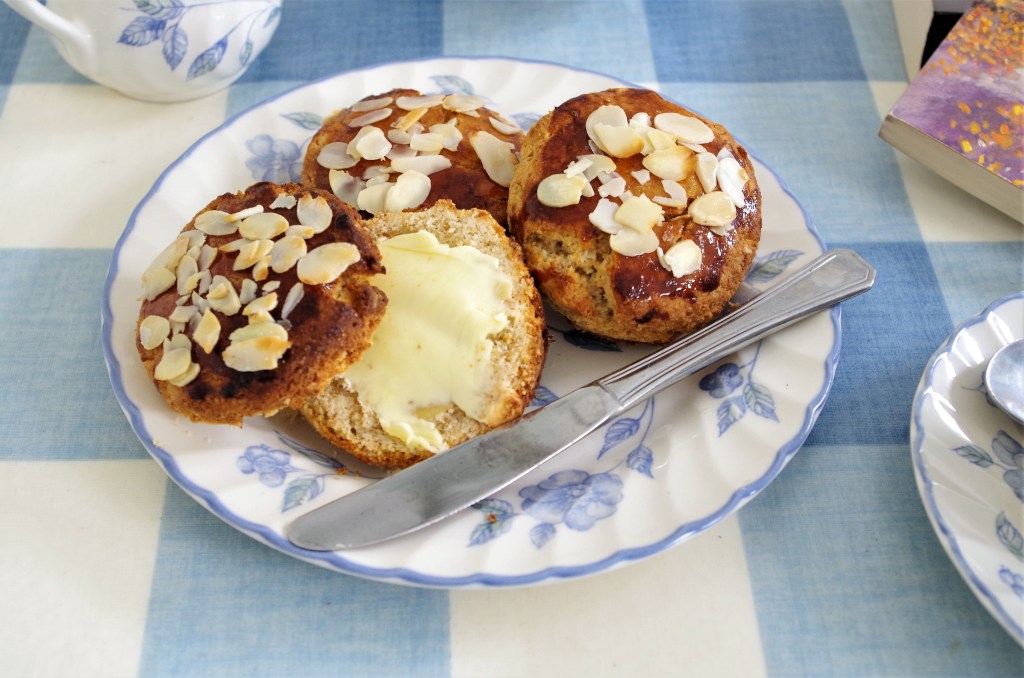


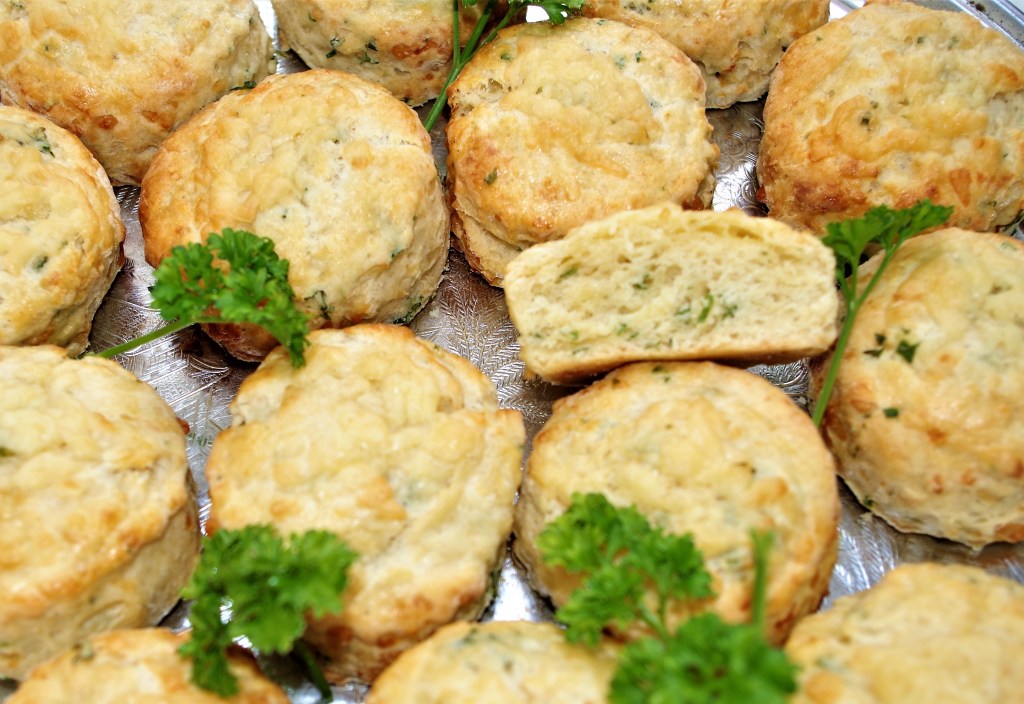
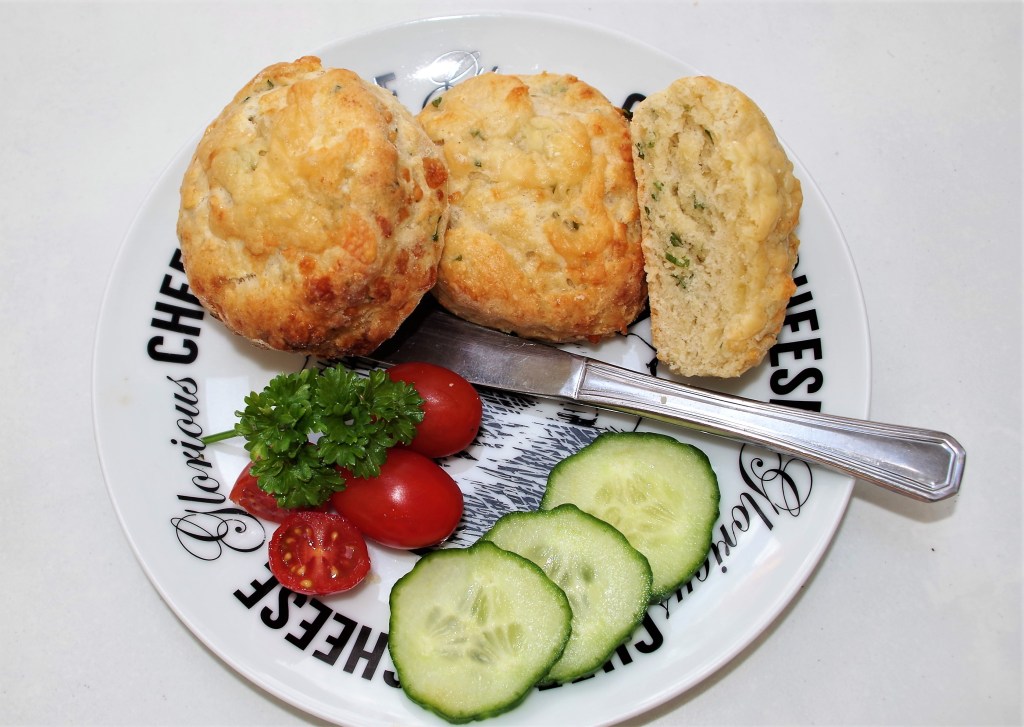
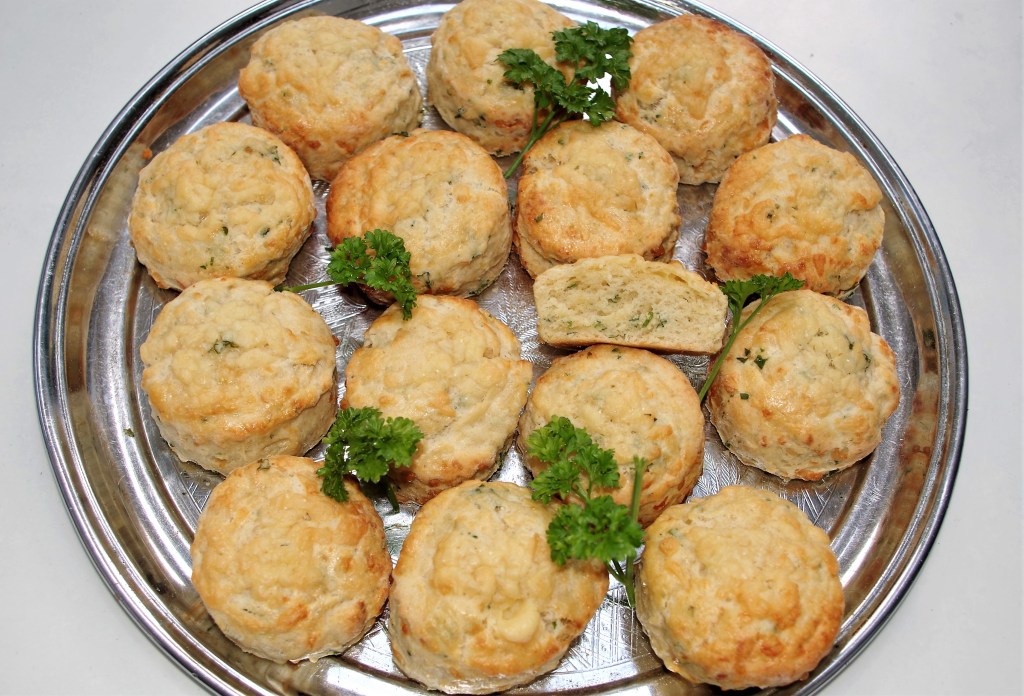
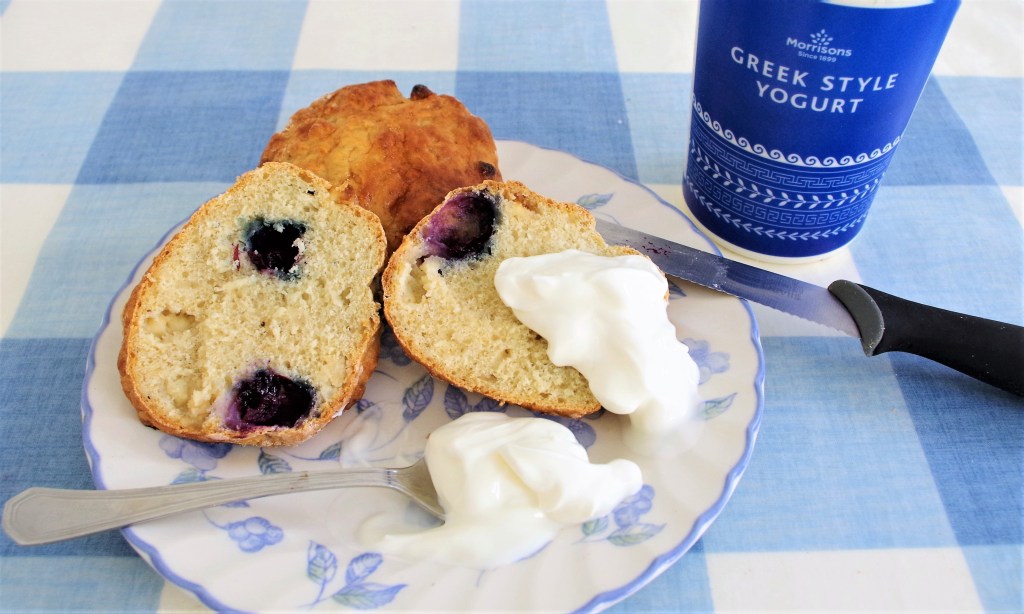
Blueberry and White Chocolate Buttermilk


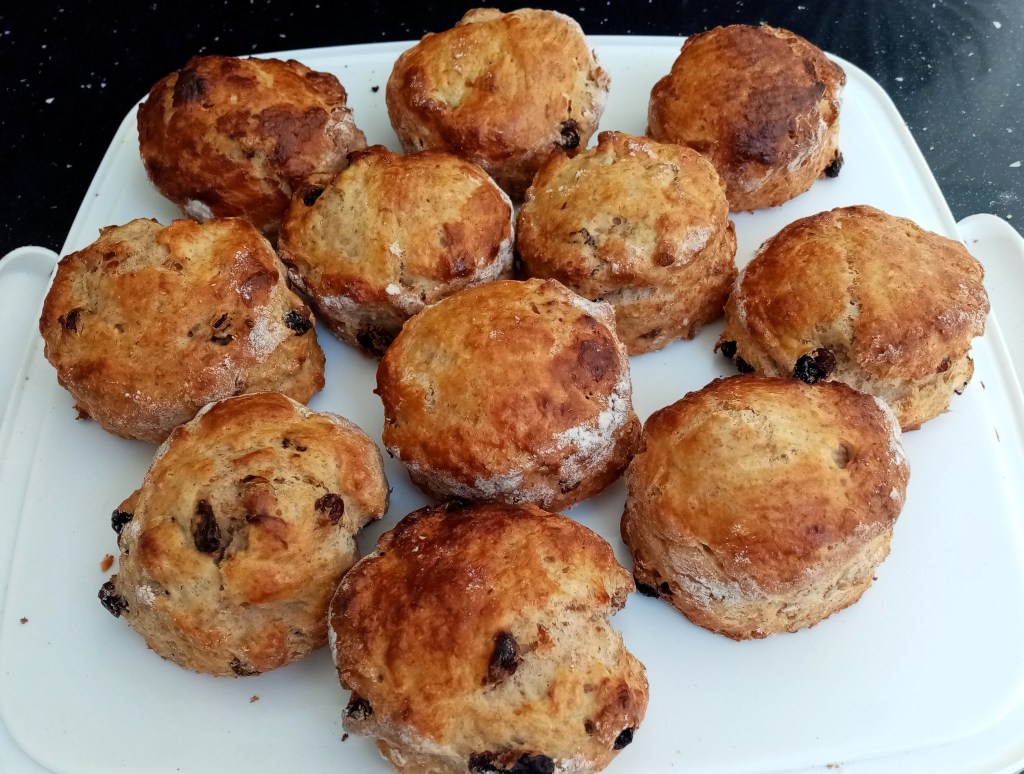
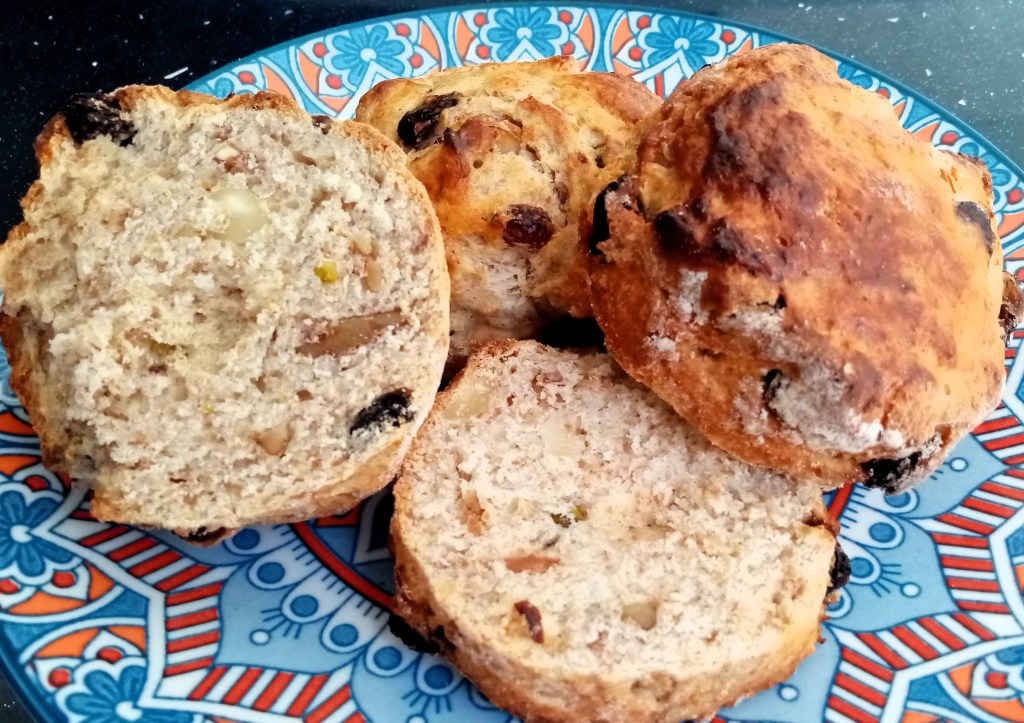
If you’d like to make a comment or ask a question please do, via the contact page, or have a look at the rest of my site for lots of other great sweet and savoury recipes.

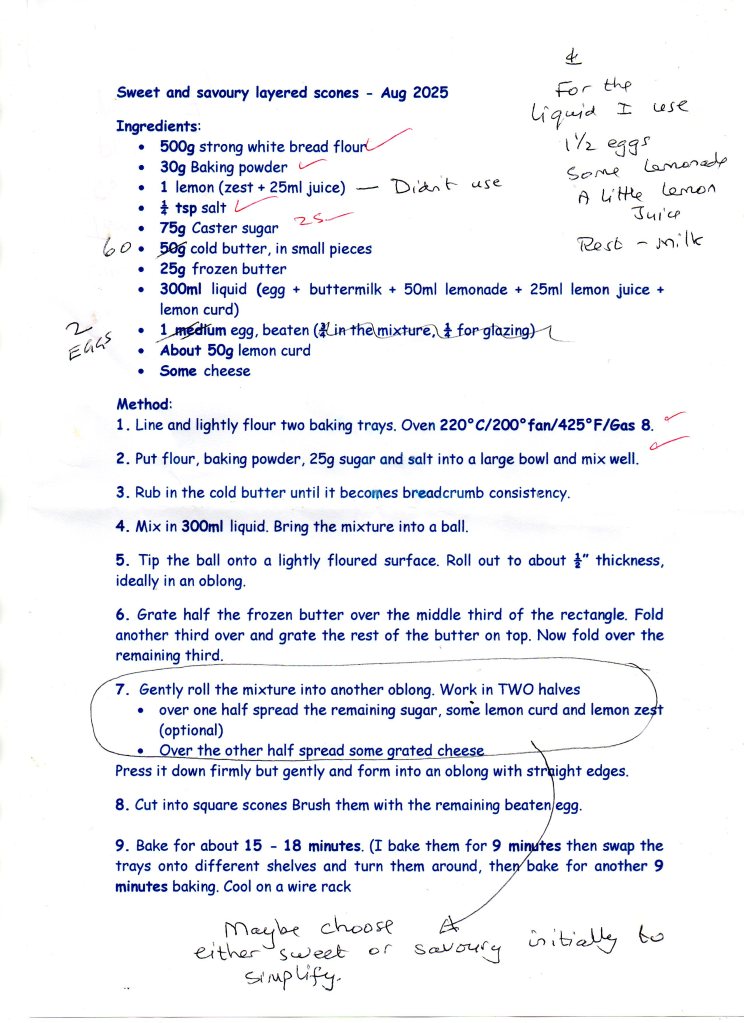
Finally, here’s my original recipe
 Retired Bloke on Food n stuff